Showing posts with label bailout. Show all posts

Friday, August 2, 2013

We're Doing It Wrong

Chapter 9 Mile

Detroit is bankrupt. Or not. Or it is. Regardless, the city that provided the American Dream's 20th century engine has fallen victim to the 21st century version. By now you've likely heard most of the stats: it was the 5th most populous city in America in 1950 with over 1.8 million (and only a couple hundred thousand short of 3rd), today only about 700,000 remain, nearly a quarter million have left in the past decade alone; half the parks have closed since 2008; 78,000 vacant structures and 60,000 vacant land parcels; 40% of the streetlights are out and the city has just 36 ambulances, of which generally no more than 14 are in operation at any given time, and there about 12,000 fires a year to go along with the highest violent crime rate in the US (why not bust a cap in someone's ass for a few bucks when you can get a pizza delivered faster than it takes the cops to respond, about 58 minutes compared to the 11 minute national average and only 8.7% of the cases are solved compared to 30.5% nationwide); tax collections are down 20% over the past five years and the official unemployment rate stands at 18% which is misleadingly low as less than half of those over 16 are actually working. Oh, and there's $18 billion in debt growing by a few hundred million a year. You know the script by now, cue the neoliberal-agenda-advancing blame game chorus of big government, corrupt politicians, greedy unions and gold-plated pension plans because, as we know, this is an isolated incident that the free market will clean up with its invisible hand, just another black swan, nothing that even an awful Hollywood movie could've predicted:

Er, you mean..., no, it can't be so simp..., seriously? ROBOCOP 2! It couldn't have at least copied the script from the original? Is it really just a transparent attempt to sell off what remains of the commonweal and maybe establish an Ayn Randian tax-free "commonwealth" for our modern day John Galts on Belle Isle selling citizenship at $300,000 a head in hopes of becoming a 'Midwest Tiger' to compete with the Asian Tiger of Singapore? Wait, no, this just seems like a thinly veiled attempt to impose an anarcho-capitalistic future on all of us, after all, $37 million, that's just monopoly money, Omni Consumer Products (OCP) doesn't really exist and we all know there's no such thing as robocops to come and save the day! Alas, that's the point, science fiction isn't meant to read as an instructional manual but a warning. The dream has become a nightmare we must wake from and realize that Detroit is but a microcosm of the defunct American model that celebrates profitability rather than society, individuality over solidarity and conformity but not equality. Otherwise, they'll keep turning up the heat by adding zeroes to the bill, turn OCP into an acronym for Oligarch Controlled Polity while their semi-autonomous drones circle the skies keeping us in line.
 
What's Going On? First off, there is a lot of blame to spread around and it's easy to get lost in detail and fail to separate cause from effect, especially as so many of the latter are easily packaged and sold as the former. Corrupt politicians such as Kwame Kilpatrick taking kickbacks or a city run by a one-party government sure look like causes, but they're not. Even the more obvious culprits such as the '67 race riots and the resultant white-flight or the cities susceptibility to disaster due to the lack of economic diversity that comes with being a one-industry town were nothing but manifestations of the root of the problem. Ditto the city's 60% poverty rate for children and the 50% of the population reported to be functionally illiterate. No, we've gotta go way back, maybe not as far as Adam Smith or David Ricardo as it isn't capitalism itself we need to castigate nor even to Henry Ford's first assembly line to find the cause of Detroit's decline. It might seem a bit unfair and facile but let's simplify things and point the finger at poor old Simon Kuznets and his work developing the first comprehensive set of measures of national income, what we know today as GNP and GDP.

Wait, bear with me a moment as not only will it take at least that long to explain how something as mundane and seemingly practical could be the cause of Motown's meltdown but the reality is Simon saw the great danger of his work from the get go and therefore seems a very good place to start the explanation. In his first report to the US Congress in a section titled "Uses and Abuses of National Income Measurements" he warned:

The valuable capacity of the human mind to simplify a complex situation in a compact characterization becomes dangerous when not controlled in terms of definitely stated criteria. With quantitative measurements especially, the definiteness of the result suggests, often misleadingly, a precision and simplicity in the outlines of the object measured. Measurements of national income are subject to this type of illusion and resulting abuse, especially since they deal with matters that are the center of conflict of opposing social groups where the effectiveness of an argument is often contingent upon oversimplification. [...]

All these qualifications upon estimates of national income as an index of productivity are just as important when income measurements are interpreted from the point of view of economic welfare. But in the latter case additional difficulties will be suggested to anyone who wants to penetrate below the surface of total figures and market values. Economic welfare cannot be adequately measured unless the personal distribution of income is known. And no income measurement undertakes to estimate the reverse side of income, that is, the intensity and unpleasantness of effort going into the earning of income. The welfare of a nation can, therefore, scarcely be inferred from a measurement of national income as defined above.
Pretty prescient stuff for an economist. Unsurprisingly, we failed to heed his warnings and this one number (well, two, GNP and GDP are different) and more specifically making sure it's constantly climbing has become the primary purpose of public policy. In fact, as economics and finance have come to completely rule our lives it's become an unhealthy obsession, the disease of our civilization.

Again, we need to pause and explain ourselves. Growth is good up to a point; there is no denying that life has been improved for billions thanks to the benefits accrued by advancements owed to growth. However,  we need to ask ourselves what is the point of growth if not to improve our quality of life? Now, there's a tricky term, "quality of life", how to measure growth against something so seemingly subjective? Living standards quickly devolves to "material living standards" and how many iPads everyone has. Happiness? Sounds good, but tough to quantify. Satisfaction? Ditto. All equally slippery. So let's start simple and graph the relationship of life expectancy versus per capita GDP in various countries. (More complete country chart can be found here.)

The first thing that jumps out is the near vertical rise on the left side as life expectancy quickly rises along with GDP. However, it's hard to miss the diminishing 'bang for the buck' we get from raising GDP, to the point that it seems to not have much effect after as little as $10,000 per head, hello Costa Rica. Interesting but so what, right? Well, we were originally trying to find the cause for Detroit's demise, but this is our first peek into the likely cause of not only the troubles there plus in Greece, Stockton, CA, Portugal, Jefferson County, Al, , Cyprus and those to come from Baltimore to California to Italy but also into what ails much of the west as efforts around the world for the past 75 years have focused on one thing: increasing GDP.

Superstition
Us humans are amazing in so many ways but one of our biggest failings is the inability to let go of strongly held beliefs, especially when they've explained so much, and worked so well, for so long. GDP and economics is no exception as cognitive dissonance and groupthink combine to create blind spots. Especially in America where after first beginning to recover from the Great Depression and then emerging virtually unscathed from World War II to find itself the only running engine to power the world's economy, GDP continued marching upwards. A key to remember at this point is that much of this period of strong growth coincided with a huge reduction in income (and wealth) inequality as much of the fruits of growth was spread from the penthouse executive board room to the basement boiler room. Also worth noting are the words of the foremost economist of the era, John Maynard Keynes, who upon seeing the tremendous opportunities made possible by growth, predicted that the working week would be cut to perhaps 15 hours a week, with people choosing to have far more leisure time as their material needs were satisfied. Incredibly, his optimistic prediction that (material) living standards in "progressive countries" would be between four and eight times higher was made in 1930, a year into the Great Depression! Sadly, this latter prediction has proved true (living standard in developed western economies will have risen about eightfold by 2030) while the former has fallen flat on its face.

You're probably wondering what all this has to do with Detroit, right? One word, hyphenated or not, like Jay Z: neoliberalism. It has not only robbed us of real progress but also ensures there will be many more Detroits and Greeces to come. See, growth, like so much that tastes good at first but eventually turns poisonous, became addictive. All was good up to the 1970s when the United States' unchallenged position as the colossus of the capitalist world came under assault. Rising international competition (read: Japan) as other nations had finally recovered their industrial base after the war coupled with multiple oil shocks as the Arab world awoke to the rape of their resources in return for peanuts led to declining productivity and profitability along with rampant inflation and unemployment, stagflation. Oh, there was a little war they lost too. The corresponding loss in confidence in the dollar also forced Nixon to end its convertibility to gold and take the world into the little understood world of fiat currencies. About the same time as growth seemed to be stalling, the Club of Rome's The Limits of Growth was making Malthusian claims on the unsustainability of infinite growth. The US was ripe for a revolution and they got it in neoliberalism.

The popular myth is that Ronald Reagan and Margaret Thatcher rode in to save the day. Of course they were nothing but marionettes and we all know that a marionette's puppeteer is called a manipulator and so it should come as no surprise that they also manipulated us. From neoliberal prophet Friedrich Hayek and his Mount Pelerin Society the poison oozed through Milton Friedman into the University of Chicago to spill out into the world via thinktanks spewing propaganda to be transmitted by their media lackeys and forced onto the rest of the world by the IMF, World Bank and WTO. America has the Heritage Foundation, the Cato Institute and the American Enterprise Institute while the UK's versions include the Adam Smith Institute, the Institute of Economic Affairs and the Centre for Policy Studies founded in 1974 by Thatcher's mentor, Keith Joseph. Despite their benign sounding names, these are radical organizations with almost nothing to do with the likes of Adam Smith who understood something about Moral Sentiments and the dangers of private monopolies and everything to do with Hayek, Friedman and Rand and their belief in extreme individualism or social Darwinism. Freedom could only be achieved through economic liberalization meaning free trade, privatization, deregulation and relying on markets to provide public services.

No party on either side of the Atlantic has a monopoly on this evil. Democrat Jimmy Carter began the deregulation of the banking and transportation sectors. His party's Bill Clinton tag teamed with Labour's Tony Blair in devising the "third way" in a failed attempt to reconcile neoliberal economics with a commitment to social justice. This was always just smoke and mirrors to fool the unwashed masses as neoliberalism is inimical to the public good as it is always secondary to the market, an ideology wedded to the belief that the market should be the organizing principle for all political, social and economic considerations. As the benefits of citizenship are allocated on the basis of perceived economic utility to the state, corporations are considered the primary citizens while individuals are seen as consumers first and citizens second, peripheral ones at that. Corporations and those in the 1% are portrayed as job creators while the bottom 20% are framed as economic leeches siphoning off financial benefits they don't deserve when it is the opposite that is true as economic policy is designed to distribute wealth upward. Tax breaks and subsidies for corporations and the wealthy are called market incentives while benefits to the poor, aged or disabled are framed as entitlements. However, rather than withering away, as neoliberal theory would have it, the state has instead grown as it plays an active role in the introduction, implementation and reproduction of neoliberalism.

The Tracks Of My Tears
Yeah, yeah, you're still wondering what all this has to do with Detroit going from being the city with the highest median income to bankruptcy in half a century and what it means to America and the rest of us. History has already been rewritten to tell us high wages and benefits were Henry Ford's idea when in fact they were fought for and won through struggle and solidarity. World War II had cemented Detroit's industrial importance as the Arsenal of Democracy and it seemed a place which was proof of capitalism's ability to generate and maintain a large middle class. The illusion was short-lived as jobs were already flowing out of the city to the suburbs in the 1950s just as the migration of African Americans to the city was increasing, lured by the promise of freedom and opportunity denied to them in Jim Crow's last, desperate days. Instead they were welcomed by white flight, residential segregation and deindustrialization; rising racial tension, ghettoization and joblessness was a recipe for disaster which erupted in the 1967 rebellion. In addition to dollar loss this of course kicked white flight into high gear resulting in the loss of much of the city's tax base. Throw in the oil shocks of the early 70s and their influence on changing consumer requirement and the failure of the auto industry to adapt and you had a city that needed a saviour but instead got no succour.

It's no coincidence that Detroit's decline coincides with that of America as the US had the most wealth for the parasite of neoliberalism to feed off and Detroit was its richest and most vulnerable city. Back in 1960, GM was not only the city's but the nation's largest employer and paid an average hourly wage of $50 in today's dollars, including health and pension benefits; today Walmart has assumed the mantle and pays $8.81 and a third of the workers work less than 28 hours a week and don't qualify for benefits. The ratio of CEO-to-worker pay has ballooned more than 1000% since 1950, from around 20 to 1 to over 200 to 1 (1,795 to 1 at JC Penney). Not only that but the highest tax rate faced by those CEOs was 91%; today it's under 40%. It was those CEOs at the big 3 who made the decisions that sped the demise of Detroit (GM’s Geo Metro 40 miles/gallon for $9,740 in 1991; today GM offers the Volt for $39,145 that requires you to plug it in AND put gas in it to only get 37 miles/gallon) aided and abetted by the neoliberal policies of maintaining short term growth at the cost of long term prosperity. Specifically, it was the financialization of the economy, the pursuit of 'free trade' policies and the war on drugs which sealed the fate of the city.

Neoliberalism is predicated on decreasing the individual's reliance on the state thus increasing their initiative to pull themselves up by the bootstraps. The problem is it is impossible for those mired in poverty to do this when they don't even have any shoes - ie. education, healthcare, adequate nutrition, employment opportunities. Meanwhile, those with closets already overflowing with footwear have their shoes shod whenever they need it. Er, let's try to explain that a bit better starting with the election of Ronald Reagan and the belief that income inequality was a prerequisite to growth. Not only was it seen to provide incentive to work harder but it raised the savings rate at the top and as the rich have a lower marginal propensity to consume than the poor it would therefore accelerate investment. Additionally, demand for new products almost always emerged from among the rich and it was them alone who could afford the cost involved in research and development thus enriching them should augment innovation. In 1981, the Budget Reconciliation Act along with the Recovery Tax Act introduced across the board tax cuts favoring the redistribution of income to the rich, deregulated monopolistic industries and began the war on the poor by reversing many of the social gains made over the previous 50 years. The shooting war, however, came with his war on drugs.

War (What's it Good for?)
Sometimes numbers are staggering enough on their own and require no explanation. When the explanation is every bit as distressing, well, then you've got the American prison industrial complex. Only China comes close to the US in prison population and only Russia approaches them in percentage of the population incarcerated. Though only comprising 5% of the world's population, the US has 25% of the world's prisoners, about 1% of the population is trapped in the system and the total number has increased 700% since 1970. Yes, it's been a booming industry that's seen $300 billion spent since 1980 to expand the prison system. Not only does it provide employment for the gatekeepers, it reduces the eligible workers counted in the unemployment rate. The poor, worth almost nothing to our corporate masters on the streets, can generate revenues of $30-$40 thousand a year behind bars. Unsurprisingly, almost half of federal prisoners are in for drug related offenses. The bipartisan love of war is illustrated by Clinton's signing of the crack cocaine sentencing guideline bill which targeted the poor black community by making crack cocaine convictions exponentially longer than those for powder cocaine. It gets even worse when you realize it was the CIA who introduced crack into inner-cities to fund waging war in Central America. Prison privatization has brought the market into play with the law while prison labour is a pretty attractive alternative for those looking for a, um, captive work force.

We shouldn't ignore that more traditional method of sacrificing the money and lives of the poor for the glorification and enrichment of the wealthy. Much like neoliberalism, the idea that war is good for the economy and therefore beneficial is a societal sickness that has been perpetuated by myth makers who mysteriously profit from this delusion. Here we should pause once again to consider the suicidal tendency involved in believing that GDP growth is a good thing. Did you know for example that the Gulf of Mexico oil spill added about $300 to the average Americans income? The bloated prison system adds about $125. The US medical system isn't the most expensive in the world (while getting worse results than most of the 'advanced' economies) because they like having millions die for lack of basic care (we hope), but because it adds more zeroes to the bottom line and GDP. Add in a bit of conspicuous consumption, insanely priced education and the trillions wasted on war and suddenly it's pretty easy to understand why even though the size of the US economy has doubled since 1970, overall well-being has declined. Reagan pumped up the gravy train flowing from the public to the private purse, Bush the elder began the family tradition of bombing Iraq, Clinton, though he oversaw a reduction in military spending still indulged in some explosions, Dubya, yeah, he almost doubled the amount spent to kill people and Obama has put a smiley face on murder by remote control.

Signed, Sealed, Delivered
It was Bush the elder who got the NAFTA ball rolling and kept the Uruguay Round of trade talks alive but it was Clinton's signature that brought NAFTA and the WTO to life and sealed Detroit's doom. The agreement turned North America into a 'free' trade continent which Clinton promised would promote "more growth, more equality, better preservation of the environment, and a greater possibility of world peace". Oh, and it would create 200,000 jobs. Well, he was only a little over a million off as a report by the Economic Policy Institute documented that 879,280 jobs were "displaced" due to the deal. Thanks to it and other free trade deals pushed on the public to promote growth, the exciting game of labor arbitrage has been played for the past few decades, a game always won by big business as profits are padded at the expense of labor as salaries are slashed and jobs outsourced. While employment protections are rarely included in these deals, NAFTA provided a template for investor protections which effectively remove sovereignty from signing states.When you wonder why neither the public nor your government can ban Monsanto crops to prevent the loss of agricultural diversity or Bayer from killing the bees we depend on for pollination or Chevron from poisoning the water table by fracking you'll be sure to find a clause in one of the corporate written free trade deals one of your governments sold to you as necessary for economic growth.

As mentioned a few hundred paragraphs above, it's rarely those on the throne making the decisions; therefore, its the stories of those who do that make for the grist in this modern day cautionary tale. Clinton's Secretary of the Treasury Robert Rubin was one such Grima Wormtongue. Time Magazine would have us believe he was part of the Committee to Save the World (that's him on the left) when his face should have instead been pasted on a wanted poster. See, the crowning blow in this whole story was the financialization of the economy, a process that has allowed the illusion of economic growth to continue by simply feeding off existing wealth and borrowing from the future. For his service in the creation of the TBTF, TBTJ (too big to fail, too big to jail) bank, he was paid $126 million by the same financial institution whose very existence his policies made possible, Citigroup. Clinton's signing of both the Rubin championed Gramm-Leach-Bliley Act which repealed Glass-Steagall which had kept gambling separate from banking, and the Commodity Futures Modernization Act which prevented the regulation of financial derivatives delivered the coup de grace for Detroit and the rest of us leading us as they did directly to the 2008 financial crisis.

A spike in prices at the pump killing demand for the SUVs that had temporarily saved them combined with the financial crisis bankrupted two of the three Detroit automakers, GM and Chrysler. The same crisis collapsed the Ponzi scheme run by banks that relied on a constant stream of new mortgages to be bundled and securitized and left millions homeless. As this predatory lending targeted African Americans, both Detroit and its residents were among the hardest hit. With an ever-shrinking tax base to support an immutable city infrastructure, budgetary problems have plagued Detroit for the last 20 years. Besides a brief respite in the mid-90s when it was falsely believed that new casinos and stadiums could reverse the city's fiscal problems, the city has been burdened with a junk debt rating. In an attempt to balance the budget, the combination of rising taxes and cuts in services drives out residents and businesses while the erosion to basic social services leads to a drop in home values and rising crime. Desperate politicians become an easy mark for the wizards of Wall Street who seem to offer a way out, and besides, when the bills come due they'll most likely be out of office. While the sheer audacity of the fleecing of Detroit is dwarfed by that of Alabama's Jefferson County bankruptcy tale courtesy of JP Morgan, Detroit could have done without a $2.7 billion bill for borrowing $1.4 billion in 2005 thanks to bankster interest rate swaps and derivatives.

Here's where the morality tale gets good. This financing deal was needed to fill a gap in the city's defined benefit pension funding, the kind that provide a guaranteed annual income after retirement. Public employees paid for those pensions with lower wages while working; n other words they accepted less then to get some later. But get this: governments consistently underfund their pension plans. In Detroit, the gap's about $3.5 billion, but nationwide all levels of government are about $1 trillion short. Not so bad, as Paul Krugman would have us believe, until you consider to come up with this figure necessitates an 8% average return on invested pension assets. D'oh! Not that whole growth thing again. It gets worse. Listening or reading to much of the MSM hype (always stating the $9.2 billion shortfall which includes unfunded health care obligations) one could easily get the impression that there is a movement afoot to convince the public these pensioners are greedy bastards who don't deserve a dime. The bankruptcy process will determine which creditors get paid back and in what order, pension plans justifiably fear they may fall to the bottom of the pile, because you know, society thinks giving $19,000 a year to someone who picked up garbage his whole life isn't as important as paying off banks and hedge funds.

There's the rub. It's true. Go read the comment thread on any article about the Detroit bankruptcy and you'll soon see that Joe Sixpack has been convinced that bailing out banks is/was good as they add to the economy while pensioners are bad as they subtract. They wouldn't consider the continuing bank bailout, as in the quantitative easing program that sees the Fed give banks $85 billion a month in interest free green pieces of paper in exchange for other pieces of paper, could pay off Detroit's debt four times over each month. Nor do they see anything bizarre about a city entering bankruptcy subsidizing a billionaire's hockey team's arena that will see the city pick up almost half of the $650 million tab because corporate welfare is called market incentives and I'm sure that the money sucked out of schools, parks and you know, quality of life things to build Ford Field for the Lions and Comerica Park for the Tigers in the past dozen years has worked out great; a bunch of spanking new stadiums for those who fled to the suburbs and therefore not paying for them  to come in to the city and enjoy while the only chance to see the inside for those paying for them will be if they're selling foam fingers and foamy beers.

Money (That's What I Want)

The press reports unemployment is falling, which is true, but the warped measurement is meaningless as employment isn't rising enough to even keep up with population growth. It's not just an insufficient number of jobs, it's the kind of jobs being created; the low-paying, menial, dead end sort without any benefits. In fact, 60% of the jobs lost during the recession were classified as mid-wage while 58% of the job gains since are low-wage. This wage suppression is great for companies like WalMart who get to have their workforce subsidized by the government as most of their worker earn so little they often qualify for government assistance; tax payers pay on average almost $1 million per store. All this means wealth is flowing up at an ever-increasing rate; 121% of the income gains since 2009 have gone to the 1% (yes it's possible as they've scooped a portion of the rest of the population's pie) while corporate profits are at all-time record levels and wages are at all-time lows. Zooming out from America, the wealth gap between countries is also widening, globally the richest 300 people own more wealth than the poorest 3 billion; the richest 1% have accumulated some 43% of the world's wealth, while the bottom 80% of the planet's inhabitants have just 6% between them. Guess which group is stashing up to $32 trillion in tax havens, effectively removing wealth from circulation.

Cognitive dissonance seems to be hiding the realization that the American Dream is dead, at least in the old idea of each successive generation living better than the previous. This is because neoliberalism is great at pumping up bubbles upon which the rich float while the rest sink with the pop; it's no longer true that a rising tide lifts all boats. Privatization, deregulation, globalization, robotization, computerization and financialization have transformed western capitalism from industrial to financial. In other words we've moved from a system which produced nothing in itself but derived profit from the value created by the exploitation of labour to a system that simply squeezes profit out of existing assets. The former system was able to thrive using the old panem et circenses gambit but with the latter, present system, eventually they'll be no more crumbs to toss to the masses. Suicide rates are already skyrocketing among baby boomers as economic insecurity pushes people over the edge and now their pensions are being circled by the sharks. Meanwhile the young face the choice of fighting for a job at McDonald's or going to university so they can add to the $1.2 trillion in student loan debt and cross their fingers they can get an unpaid apprenticeship position when they're done.

Instead of realizing we're all in this together though, those manipulating puppetmasters will pull our strings using the old techniques of, among many others, media manipulation (I'll scratch your back if you scratch mine), fear (terrorists!), divide and conquer (it's those greedy unions and pensioners!), patriotism ('Murica, F#ck Yeah!) and of course debt servitude to maintain control of the flock. Lockeed was bailed out because they build stuff to blow people up, Chrysler's been bailed out a couple of times, GM once, they build Godcars don't you know, the airlines had to be because of, you know, terrorism and the banks, well, without the banks, we know the whole world as we know it would have ended. What about New York City's bailout in 1975? Well, that's different than Detroit, because, well, it would create moral hazard this time, or something. What's that? What about Mexico? No, they didn't bailout Mexico in order to save face after NAFTA was signed, did they? Yep. But not Detroit.

ABC
Solutions? Well, there's a few out there. The first step, however, is the realization that we're doing it wrong. An economy based on debt (issued by bankers, not government) inevitably collapses on itself. Henry Ford himself said "[i]t is well enough that people of the nation do not understand our banking and monetary system, for if they did, I believe there would be a revolution before tomorrow morning". New money is continually lent into existence at the push of a button so that existing debt can be repaid, but by necessity there is always more debt than money to pay it back. The dog chasing his tail leads to the need for infinite growth, an impossibility on a finite planet thanks to our enemy of diminishing returns, entropy. We've got to realize we already have enough known oil and gas reserves to kill ourselves and stop exploiting tar sands, shale gas and the Arctic. We need to refuse to pay a 280,000% markup for our most important resource, water. The purpose of economic policy shouldn't be to stimulate growth but to facilitate life. A transition to a steady state, non growth economy must eventually occur, the question is do we want to move that way gradually of our own choice or have it (or far worse) foisted upon us by the inevitable collapse of the system.

Alternatives to the constant drum beat of growth have been proposed such as Bhutan's Gross National Happiness, the New Economics Foundation's Happy Planet Index, and the Social Progressive Imperative's Social Progress Index. No growth or steady state economic policies need to be explored if we want to get off our suicidal treadmill. Perhaps once the US has been knocked off its perch atop the global GNP rankings by China sometime in the next decade we'll finally de-emphasize its importance. The chant of 'We're #2!" just doesn't have the same allure. America will still lead in such prestigious areas as anxiety disorders, obesity (well, Mexico might have passed them), incarceration rates, small arms ownership, health care cost, and energy use. Huh, taken together with the other effects of Detroit's problems mistaken for its cause, such as that 50% literacy rate and other societal diseases prevalent in America, one can make a case for simply finding a way to better spread the wealth than grow it. It seems we should take a lesson from the extreme wealth of Bloomfield Hills and Grosse Pointe and extreme poverty of most of Detroit co-existing in an urban metropolitan area. Yes, in fact if I remember right there's a chart that shows the relationship between income inequality and an index of health and societal problems constructed by a couple of epidemiologists. Yeah, perhaps we should look at this a little closer, or maybe we'll save that for next time.


Saturday, December 29, 2012

It's Not The End Of The World

Whether by rapture, nature, or computer there have been countless predictions of the end of the world over the past three millennia. These harbingers of doom have had many sources, from scripture to soothsayers, but all have been shown to be nothing but conjecture as the world has continued to revolve, the sun to shine and man to (de)evolve. Unless you've been living under a rock, don't get out to see movies nor have a Facebook wall to tell you, you probably heard something about the Maya calendar ending on December 21, 2012 augering the end of the world. Meanwhile, after a temporary break to obsess about the fact that they like to own a lot of guns so they can kill each other and anyone else they feel like, America's propaganda machine will go back to heralding the financial end of the world, the fiscal cliff. Like all good myths, both harbingers of doom freely mix fact and fiction to produce a potent brew believable enough to intoxicate the masses while ensuring the real moral of the story and a chunk of change will be lost in the panic to the propagandists.

Many Romans believed 634 BCE would bring the end based on a story in which twelve eagles, each representing ten years, revealed the lifespan of Rome to Romulus. Most religions have their own eschatological doctrines but it's the crazy Christians who have the longest list of false prophets. Harold Camping was simply the latest in a long line Christards to predict the end such as Paul the Apostle, Hilary of Poitiers and Martin of Tours. Perhaps tired of just killing infidel Muslims in the Crusades, even Pope Innocent III got into the act by adding 666 to the year Islam was founded to determine the world would end in 1284. Theology and astronomy have always been a toxic mix, but when Johannes Stoeffler used them to predict a worldwide flood he convinced many to move to higher ground and invest in boats before February 1, 1524. As many as 100,000 'Millerites' were moved enough by William Miller's preaching of the Second Coming of Jesus Christ between March 21, 1843 and March 21, 1844 to sell all their belongings. Like Camping, when the world woke up the next day to normality, Miller just moved his date back; his followers were so fervent they went on to form the Seventh-day Adventist movement.

Sowing panic in the markets has always been an easy way to make a mint for some and to steer economic policy for others. Stories of the so-called fiscal cliff are another textbook example. Nathan Mayer Rothschild’s riders and messengers were able to get news of Wellington's defeat of Napoleon at Waterloo a full day in advance of the government’s own news carriers. As the story goes, Nathan convinced the rubes he had knowledge of Napoleon's victory by selling heavily on the English stock market. When panic ensued, Rothschild had his agents snap up stocks for pennies on the pound, entrenching the family banking dynasty. Many claim the Panic of 1907, the United States' first modern financial crisis, was engineered by JP Morgan to implement certain financial regulations and ultimately the creation of the Federal Reserve System in 1913. Newspaper reports of the days ahead of the panic seem almost comical in their propagandizing prose describing the health of the financial market only to be proven completely wrong when the crash led to a drop of 21% in commodity prices, a 47% spike in bankruptcies and a rise in unemployment from 2.8 to 8%. Lucky these things could never happen today!

A simple connection can be made between today's supposed harbingers of apocalypse, the end of the Maya Calendar and the US fiscal cliff: both are completely made up and being used for gain by the mythology makers of our day. The Maya understand 17 different calendars, some of them accurately charting time over more than ten million years. The one causing all the hub-bub is the Long Count which is an astronomical calendar based on the cycle of Pleiades used to track longer periods of time. Just as with other calendars, the end of the old signals the start of the next. Americans on the other hand created the fictitious fiscal cliff just last summer when the federal debt level was about to hit the imaginary debt ceiling. Imaginary in that a limit that can be extended is not a limit but a gimick which in this case proved a useful opportunity for fearmongers. As a deal couldn't be struck, an agreement was reached for automatic spending cuts to kick in come the end of 2012 thus the name fiscal cliff was coined to scare the people into believing cuts need to be made to avert financial disaster in the new year. However, just as we can go out and buy a new calendar, the US government has the power to simply go out and 'buy' more dollars whenever they need to.

The reason it's so important for the elite to sow fear among the infotariat is that both imaginary apocalypse makers are in fact opportunities to reshape the world we live in. The current Long Count cycle finished December 21st when it reached the end of the 13th b'ak'tun which themselves are made up of 20 k'atun cycles composed of 20 tun each of which last for 18 winal cycles that are about a year long. The end of the Long Count has nothing to do with death but everything to do with rebirth. The true meaning is transformation not conflagration. According to the correlation between the Long Count and Western calendars accepted by the great majority of Maya researchers, the starting-point of the just ended Long Count cycle is equivalent to August 11, 3114 BCE. This date marks the creation of the world of human beings according to the Maya, the last great transition.

Coincidentally, we are told by textbooks that civilization began around 3,000 BCE in Mesopotamia as the Sumerians simultaneously developed all the traits of high civilization: the wheel, metallurgy, astrology, astronomy, calendars, taxation, bookkeeping, an organized priesthood and of course written texts. Ancient Egypt as we know it came into being with the union of Upper and Lower Egypt and the start of the First Dynasty under Menes somewhere around 3100 B.C. Should we go on about the significance of that time? Stonehenge has been dated to around 3000 B.C. It was also around 3100 B.C that stone circle building and other types of megalithic structures were being built throughout Britain, Scotland, and Ireland. Newgrange, the large passage-grave in Ireland, is generally dated to about 3200 B.C. More? Civilization is said to have begun in China around 3000 B.C. with the emergence of the Yang-Shao culture. All very important, but not as big as what it all brought about. Yep, the whole system of modern slavery. Debt.

Even before there was money, there was debt. The arrival of civilization, agriculture and all its benefits also brought the plague of credit. The ancients learned to control it through systems such as the Jubilee, but in modern times we have forgotten the lessons of the past and let it become the system for the powerful to control wealth and therefore society. Nowhere has done a better job than America where the debt figures boggle the mind. Credit card debt has lagged since the financial crisis and sits a bit under a trillion but student loan debt has more than made up for the slack, powering past the trillion mark last year helping push consumer debt to $2.7 trillion. Total household debt is over $13 trillion, just a couple of trillion shy of total yearly economic output. But we better be sure not to mix these figures with the 'real' problem facing America, the federal debt. 

Yes, like the rogue planet Nibiru predicted by the Mayans, serious people are warning us the federal debt will obliterate us all. Wait? What's that? The Mayans never said anything about Nibiru? It was just dreamed up in 1976 by Zecharia Sitchin in his book "The Twelfth Planet" using his own unique translation of Sumerian cuneiform to identify a planet, Nibiru, orbiting the sun every 3,600 years? Then several years later, Nancy Lieder, a self-described psychic, announced that the aliens she claimed to channel had warned her this planet would collide with Earth in 2003? After a collision-free year, the date was moved back to 2012, where it was linked to the close of the Mayan long-count period? So, it's just a mixture of science fiction and psychics? Wait. Science fiction and psychics sounds suspiciously close to the definition of economics to me. 

Even though they agree on about 99% of things, Democrats and Republicans still manage to come to loggerheads often enough to make for good kabuki theater. Last year's debt ceiling fiasco not only cost the US it's AAA credit rating but also set the cuts and tax increases to go off around the end of the year. The name 'fiscal cliff' is an inapt metaphor for many reasons, but the $500 billion in tax increases and $200 billion in spending cuts represent about 4% of the US economy and would probably push the US into recession. It's a hodgepodge of policy decisions that Congress has made, or better said, not made, over the past two years, piled onto a single deadline. It's not a cliff but self-induced austerity crisis, theater designed to pressure policy makers into a deal such as the grand bargain whose ultimate goal is to dismantle social security and medicare while continuing at least a portion of the tax cuts for the rich. Despite the many other problems that exist, the added bonus of this approaching apocalypse has been that it has completely paralyzed the lame duck Congress and the status quo usually benefits one group, the plutocrats.

The simplest option is to do nothing and go over the 'cliff' but this is unlikely to happen as not only does it harm everyone but it hits the rich, the military and corporations disproportionately. While it would cut defense spending and allow taxes on the rich to return to Clinton era levels, it also would see benefits cut and taxes for all others rise as well. Additionally, with the debt ceiling fast approaching again, some kind of deal will avert the next crisis. However, the tax hikes and spending cuts are spread over two years so there isn't really any urgency. Another possible scenario is to just kick the can further down the road by simply extending the deadline by a year or two. This is what policy makers usually do from climate change to war related troop draw-downs, so don't be surprised. Finally, some kind of deal may be reached, ranging from some kind of small deal in which some tax cuts are allowed to expire along with some spending cuts to the plutocrat preferred 'grand bargain'. The media is undoubtedly pushing this as their overlords will be better able to disguise the savage cuts to the social safety net among all the other hoopla of a deal within the framework of the Simpson-Bowles plan, or the Domenici-Rivlin plan.


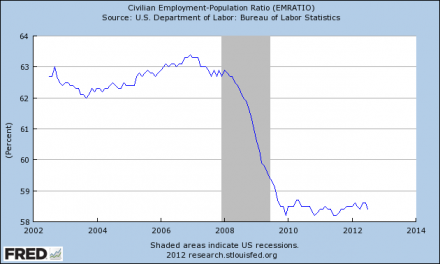
A healthy democracy would use this moment to its advantage by diagnosing the disease and taking its medicine. A rotten one will use it to make things worse for most while benefiting the few. Sequestration will see a range of spending cuts across the board (ie. defense and non-defense) in discretionary spending as mandated by the debt ceiling compromise, the Budget Control Act of 2011. Cutting doctors pay and unemployment insurance at a time of record low employment don't sound too bright but slicing a portion of the $300 million a day to fight an unwinnable war in Afghanistan sounds pretty good, but unfortunately war costs are exempt. Speaking of the unemployed, maybe increasing taxes on the 'job-creators' isn't such a bad idea. The secret is the rich aren't creating jobs at all but stealing them. Only 3.6% of the top 0.1% income earners are entrepreneurs, the majority rely on extracting rents from the rest of us. Their tax rates have fallen while the working class are paying more via payroll taxes. The other supposed engine of job creation, corporations, have done a pretty good job of avoiding paying their fair share as well. Just as the top 1% of breathing people have taken 93% of income growth since 2008, corporate non-breathing people saw their profits quickly rebound following the downturn to the point where their profits are at a record level when compared to the whole economy. Charts? You want graphs? Well, here's a few:

The Real Cliff - Employment has fallen and can't get up!
Surprisingly, cutting top marginal tax rates increases the income share of the rich!
The slow shift in tax burden from non-breathing 'people' to working class people
You might say the crisis was pretty good for corporations
The term 'fiscal cliff' was coined by none other than Ben Bernanke. You may remember him from such heists as the 2008 bank bailouts (TARP) when he helped Hank Paulsen bully Congress into handing over $700 billion to the banksters. That $700 billion sure is a familiar sounding number, isn't it? Well it should be seeing as it the amount of 'forced' austerity being brought about by bailing out banks, something that research shows predictably happens. An IMF paper showed bailouts lead to austerity. That IMF paper examined 42 banking crises between 1970 and 2007 but there's evidence all around us today from the UK to Spain and Greece. It's all so sickeningly predictable. Whatever you want to call them, the elite, oligarchs, plutocrats, Bilderbergs, they behave just like the borg from Star Trek TNG, methodically extracting all the wealth they can before moving on to the next source. The last forty-odd years were spent laying the groundwork for the biggest transfer of wealth from the bottom up the world has ever seen; the tax burden has been shifted away from the rich and corporations onto the backs of the working class, 'think tanks', 'research centers' and Faux News were created to tell the people this is normal, unions were devastated, consumerism as self-actualization became the mantra, corporations were turned into people and rewarded for shipping jobs overseas to the lowest wage countries they could find. Uh, I could go on but I already have.

Sadly, much like the end of the Long Count Mayan cycle, the fiscal cliff is being sold as disaster instead of an opportunity. The cult leaders aren't named Jones, Hubbard, Koresh, or Jouret nor were they dressed in flowing robes but garbed instead in suits and named Rand, Greenspan, Friedman and Hayek. Worse, their preachings aren't responsible for the deaths of tens or hundreds but thousands, millions and possibly eventually billions. We get to see their converts every day in our classrooms, on the streets and most often, on the TV where a parade of hucksters trying to convince us the debt was caused by Social Security, Medicare and Medicaid and needs fixing before anything else. The propaganda becomes transparent when you consider a group such as Fix the Debt, which is the loudest of the fearmongers, is composed of CEOs with ties to 43 companies with over $43 billion in defense contracts. They're strangely silent about the fact that the debt is largely due to the recession, the two Bush tax cuts while paying for two wars which have caused defense spending to double since 2001 putting US military spending equivalent to the next 26 nations combined.

It's telling that as the 21st of December neared more effort was expended dispelling the Mayan apocalypse myths than extolling the possibilities that a new era of peace and unity could bring. Bolivian president Evo Morales marked the winter solstace and auspicious calendar date by extending an open invitation to the world to celebrate "the end of the Macha and the beginning of the Pacha, the end of selfishness and the beginning of brotherhood, it is the end of individualism and the beginning of collectivism." Similarly, as we near the so-called fiscal cliff, more energy is being expended to convince us the end is near if we don't make fixes which will exacerbate the problems rather than solve them. Every challenge we've faced this millennium has been made worse: 9/11 led us into a never ending global war on terror, climate change has brought an endless parade of broken promises and conferences, financial crisis a perpetual bailout for the perpetrators and sellout of the people. No, just as December 21st wasn't the end of the world, the fiscal cliff won't bring about the apocalypse but the majority of us would be better off if we turn off the current disastrous path.
Update Jan.22 -

Friday, August 24, 2012

The Hazardous Morals of Bankers

Warning: You must forgive the writer for the exceptional length of this piece as a combination of rust that accumulated over months away from writing, a little too much time on his hands and what is feared to be the initial stages of ambiguphobia all contributed to the problem. 
- ed.

US federal debt will be more than $16 trillion by the time you read this. Student loan debt in the land of the free surpassed both credit card debt and the $trillion mark earlier this year. Greece teeters on the brink of bankruptcy while the other PIIGS wait their turn in the slaughterhouse. Three cities in California declared bankruptcy within a month this summer while nations have given up their sovereignty in order to avoid the same fate. Tens of millions have been thrown out of their homes in the past four years while even the Catholic Church battles to remain solvent. All of this was kicked off with the collapse of Lehmann Brothers four years ago triggering a crisis which forced governments and central banks around the world to pour trillions of dollars of bailouts into the financial system in order to stave off financial collapse and the threatened panic, chaos and disaster sure to follow. So, why are we here four years later staring over the US fiscal cliff, waiting for the eurozone to collapse and watching local sheriffs play the muscle for the mafioso banks repossessing all our neighbours possessions? The same reason the crisis seems perpetual. Debt and it's collector, moral hazard.

You have to choose between trusting to the natural stability of gold and the natural stability of the honesty and intelligence of the members of the Government. And, with due respect for these gentlemen, I advise you, as long as the Capitalist system lasts, to vote for gold.”
 - George Bernard Shaw

Like all good yarns, that of debt goes way back in time, before money, before barter, beginning with the Sumerians in Mesopotamia over 5000 years ago in fact, but we don't need to go back that far. No, forty-one years is enough for our purposes, when Richard Nixon ended the post war Bretton Woods International Monetary system by suspending the convertibility of the dollar into gold (then $35 to the ounce, today around $1600) on August 15th, 1971, effectively creating the current floating currency regimes: fiat money. No longer would the US dollar be convertible to gold; no longer would money creation and thus finance be constrained. Not only was the US fighting a war in Vietnam that had to be paid for but they were battling "international money speculators" as Tricky Dick dubbed them. Heck watch for yourself:


So it was that the casino known as the financialization of capital was built, in order to protect the average worker "because they [financial speculators] thrive on crisis, they help to create them". By no means was this the first time the world had used virtual money with nothing guaranteeing its value but our faith. According to David Graeber, there have been two such previous periods in the history of money and debt: The Age of the First Agrarian Empires (3500–800 BCE) and The Middle Ages (600 CE — 1500 CE). The key difference with today was that both those eras saw strong institutions and traditions which placed controls on the potentially catastrophic social consequences of debt from Mosaic jubilees (debt forgiveness every 50 years) to Christian and Muslim prohibitions on usury. Fast forward in time to go backward as the current era has seen protection turned on its head creating the first effective planetary debt enforcement system, operating through the IMF, World Bank, governments, corporations and other financial institutions. In the past we protected debtors; today we protect the interest(s) of creditors. Spot the doublethink involved here as the danger posed by financial speculators led to a policy which in turn empowered the threat leading to it's perpetuation becoming a necessity to maintain the status quo. The battle against the money speculators has been fought just like the war on terror.

Nixon's move had predictable results, a series of crises as wave after wave of speculation, manipulation and deregulation smashed against the economy. Predictably, with no physical limit to fiscal and monetary expansion, government debts ballooned leading to inflation which needed 22% interest rates to tame causing economic malaise that necessitated tax cuts (mostly for corporations and the rich) and deregulation to get the economy going again. The balance of power between rentiers and workers was shifted by slashing capital gains and opening investment loopholes so that in less than a generation the very group we had been warned about had been handed the keys to the Porsche and proceeded to drive us all over the edge. The process seemed almost planned, conspiratorial, but it was our own hubris that allowed it.

"There are compelling reasons for paying attention to this potential for catastrophe as, every debt crisis in history since Solon of Athens has ended in inflation, bankruptcy or war, and there is no cause to believe we’ve solved this one, even if it has been postponed." - Susan George; Fate Worse Than Debt, p. 196

The Cliff's Notes to the crisis reads like a tragedy. Steady erosion of the competitive advantage enjoyed by the US after WWII and the west as a whole to the east leads to policies which ensured wage stagnation for those working in industries losing employment and skyrocketing renumeration for the CEO's outsourcing those jobs and the financial industry which facilitates it. This creates a feedback loop in which those at the top enjoy more influence on legislation thanks to their enhanced financial position. Those at the bottom, seeing themselves falling further behind turn to debt in order to maintain the illusion of keeping up with the Joneses. Check out this interactive chart to see the machine in action. Meanwhile, the flood of money to the top leads to fewer and fewer available investment alternatives necessitating looser regulation on credit to lend to less and less credit worthy clients through the creation of creative, near magical, financial instruments. All the while, the growing inequality brought about by transferring wealth to the top slowly strangles the consumer driven economy (about 70%) as those who would spend have less while those who invest, at home or abroad, have more. A little more doublethink courtesy of trickle-down economics.

On the government side, though Reagan talked a fiscally conservative game, he walked a public spending splurge as debt tripled under his watch. Bush the elder didn't do much better and though Clinton managed to run a couple of surpluses late in his second term, Dubya and Congress managed to pass two successive $trillion plus tax cuts while fighting two separate $trillion plus wars along with passing a $trillion plus prescription drug plan. The Anglo-Saxon affinity saw the UK walking in near lockstep; just replace Reagan with Thatcher and Clinton with Blair at the head of the parade through the Corporation of the City of London instead of Wall Street. The financial sectors share of domestic US profits skyrocketed from below 16% to 41% making bankers more important than ever. The partial repeal of Glass Steagall, allowing banks to gamble grandma's pension with the Gramm-Leach-Bliley Act (also known as the Financial Services Modernization Act) and the Commodity Futures Modernization Act which ensured that the credit default swaps and collateralised debt obligations at the heart of the 2007/8 crisis wouldn't be regulated were the finishing touches as the banksters had merged with government and rigged the economy for explosion.

The story that unfolded in continental Europe was somewhat different but had the same result. Overnight, countries such as Ireland, Greece, Spain, Portugal and Italy were expected to transform into Germany. Shockingly, it didn't happen and without their own currencies to debase in order to regain competitiveness, the peripheral, low-capital investment economies were crippled while German producers were given a boost. Not only did prices go up - in Spain a loaf of bread doubled in four years - but salaries stayed about the same, rising 14% in the ten years from the introduction of the euro January 1st, 2002 to the end of 2011. Throw in the additional enticement of suddenly being deemed nearly as credit worthy as their northern partners and you've got yourself the perfect debt bomb recipe. The explosion of Benzes, Beemers and Audis on the streets of Madrid and Dublin created a surplus that found its way back to German banks who had to lend this money to someone and were happy to find eurozone approved customers from Porto to Thessaloniki to buy more German cars or real estate developers to build beach resorts to take vacations in. Each country took their own path to purgatory, in Spain and Ireland it was more private bank debt while in Greece and Portugal it was more public (and Italy, well, they've always had too much debt).

As we know, our story doesn't end well, in fact, there doesn't seem to be an end as it's starting to feel like the neverending story. The total cost is incalculable  in dollars, euros or pounds, but it's the human cost that should remind us that economies are meant to serve people and not the other way around. When the crisis hit, we were told we had to bailout the banks or the world would end, so we did. Ever since it became clear that Greece wasn't going to be able to maintain its debt, the troika always manages to get the money to Athens on time. When the Irish banks couldn't keep afloat, their government threw them a lifeline and guaranteed their debt. Spanish banks were going under so once again the troika (IMF/ECB/European Commission) saved the day. Trillions of paper dollars, pounds and euros all to ensure the debt obligations continue to be paid, trillions the people will have to pay back. For what? The sums will never be paid off, everything has been done to keep interest payments flowing to the banks and to give them enough time to get their capital out. The price of paying off failed bankster bets is not only the sweat of our brows but becomes ever more demanding, framed in the Orwellian language of fiscal austerity/consolidation, structural adjustment/reform, labour flexibility, competitiveness, and growth.

In the 70's and 80's the IMF/World Bank became despised figures in the developing world. As global capital sought higher returns than could be found in the developed west, their sites settled on the poorer resource-rich nations of the south and east where they found dictators, anti-commie generals and corrupt legislators willing to sign over their people's futures in exchange for ready cash to build vanity projects, fund coups, suppress insurrections or simply pad their Swiss bank accounts. When the people of their nations found they couldn't pay, the men in black would arrive, preaching the 'free market' mantra of globalization, structural adjustment programs, which always had the effect of worsening life for the people while benefiting the foreign corporations. Eventually, the anti-globalization movement and debt cancellation voices became loud enough and democracy returned to many places and debt was in some cases even forgiven. The first part of the story is now playing itself out in the 'developed' world except this time the countries aren't even getting a hydroelectric dam, bombs or a statue in return. Debt is granted only to maintain existing debt in exchange for lowering spending on those things that help the people, shredding the social safety net, firing workers, lowering tariffs and taxes and eliminating workers rights in a duplicitous attempt to make the economy more competitive in order to grow and pay off the increased debt load. Unfortunately it has never worked, isn't working and never will. The only winner, for awhile at least, are the banks to whom the interest keeps flowing.

Ironically, many accept this punishment as atonement, self-flagellation to purify the soul. Debts are contracts that must be paid off, more than an obligation, as the threat of moral hazard would not only destroy our financial system but lead to anarchy (gasp!). Yet bank bailouts are a perfect example of moral hazard as the banksters have now learned that they will not pay the costs of their losses; their gains remain privatized while their losses are socialized. Morality should be the last thing they want to talk about as their lascivious behaviour has been highlighted this summer with a series of scandals that illustrate they have no intention of ever doing the right thing whenever there's a whiff of profit to be had. If they don't get caught, great, if they do, well, there will be newspaper headlines, an investigation and finally, at worst, a fine to pay, usually a fraction of what the illegal behaviour gained. Somehow, even though both Mitt Romney and the US Supreme Court have defined corporations as people, not only are the big banks Too Big To Fail, they've become Too Big To Jail (TBTF/J).

"Though the principles of the banking trade may appear somewhat abstruse, the practice is capable of being reduced to strict rules. To depart upon any occasion from these rules, in consequence of some flattering speculation of extraordinary gain, is almost always extremely dangerous, and frequently fatal to the banking company which attempts it." Adam Smith; The Wealth of Nations, Book V, Chapter I, Part III, p.820

This summer has put the lie to Adam's words once and for all. Most recently it was Britain's Standard Chartered, who NY state regulators accused of hiding $250 billion of transactions with Iran despite sanctions. A person would be charged with terrorism and sent to Guantanamo, a bank simply pays a $340 million fine; it's up to the families of those killed in terrorist attacks facilitated by StanChar to sue the bank. The reaction of the British government was particularly instructive; when a British bank is threatened with the loss of its New York banking license, officials, from the mayor of London to the Bank of England governor to the Chancellor of the Exchequer rush to its defense. This, from the same country that would and has done everything in its power to get Julian Assange extradited to the US for torture and possible execution and done nothing to prevent its own citizen, Gary MacKinnon, who suffers from Asperger's syndrome, from being extradited to the US for exposing weaknesses in the defense department's computer security systems.

Just a few week before that came the revelations of the LIBOR rigging scandal. A story that is 'too complicated' to understand by the public was therefore ignored by the media. Besides, there was that whole Batman shooting and then the Olympics to worry about. Denver theater body counts and jingoistic medal counts are far more interesting than a bunch of bankers sending each other emails, right? Well, no, not really when mass shootings seem to have become monthly occurrences in the US (surprise! another one today), the Olympic medal count can be predicted based on population, per capita GDP, past performance, and host status while the bankster collusion earned them hundreds of billions (trillions?) in profits while costing the public an impossible to figure, er, figure. Wait, sounds a bit like the Olympics. Anyway, as usual it's not all that complicated.

LIBOR stands for the London Inter Bank Offered Rates and it's used in the setting of most other kinds of interest in the world, from credit cards, student loans and mortgages to the cost of government bonds. Seeing as we live in a 'free market', up until the scandal we all assumed this rate was set by the 'laws' of supply and demand but, as usual, our naivety cost us and profited them. Instead, the most important rate in the world is determined every morning by representatives of the 18 largest western banks who report on what they expect to pay to borrow funds from each other (Inter Bank) in the future. Under LIBOR rules, the four highest and four lowest estimates are eliminated, and the average of the rest becomes the official rate. Well, shockingly, banksters used this opportunity to artificially set rates everyday a bit higher or lower in order to profit from the positions they held in their portfolios. Barclays had their boss Bob Diamond resign and was fined £290 million by British authorities, who were involved in the racket, while seven banks including Barclays have been subpoenaed in the States. A few Italian families get together and we call them the mafia and charge them with racketeering but when banks do it we call it cooperation. It will take years of litigation to sort it all out but you can be assured, a few banks will have to pay a fraction of the profits earned in the scam.

Speaking of the mafia, seeing as interest rates aren't spicy enough to make headlines, the other summer scandal involved just that, Mexican drug lords who line headless bodies on highways. Once again the contrast between the justice meted out to the flesh and blood people and the corporate people is illuminating. A real person gets caught selling dime bags on the street corner trying to raise money to go to college, we go to jail for life; they get caught laundering the money from the profits earned on those bags, they say they're sorry and get a slap on the wrist. Europe's largest bank, HSBC, not only transported billions of dollars of cash in armoured vehicles, cleared suspicious travellers' cheques worth billions, and allowed Mexican drug lords to buy planes with money laundered through Cayman Islands accounts, they also moved money from Iran, Syria and other countries on US sanctions lists, helped a Saudi bank linked to al-Qaida shift money to the US and even cleared $290 million in "obviously suspicious travelers cheques" that benefitted Russians "who claimed to be in the used car business." Lucky we only have to worry about Iranian-American used car salesmen hiring Mexican drug lords to assassinate the Saudi ambassador or this might sound like a conspiracy theory. Yep, all this was part of a report by a US senate committee which revealed HSBC failed to monitor $60 trillion in wire transfer and account activity, had a backlog of 17,000 unreviewed account alerts regarding potentially suspicious activity, and failed to conduct anti-money laundering due diligence before opening accounts for HSBC affiliates.

Each time new revelations come to light, bank executives line up to testify in front of an important sounding committee and explain how they are "horrified" by what has happened, that they couldn't have foreseen events, that measures have been put in place, that it was bad luck or a black swan or a rogue trader. Then it happens again. Just this spring, the last remaining 'good banker', Jamie Dimon had his bank JP Morgan victimized by one of those rogues as "the London whale" lost a bet on a position that could cost his bank $9 billion. Just the kind of gamble we were promised these banks would no longer make in exchange for bailing them out just four years ago. Just the kind that lost UBS $2 billion last September, Societe Generale $6 billion in January 2008, or Barings Bank $1.3 billion in 1995. Our always vigilant press is always sure to name them rogues, despite being the norm, performing unauthorized trades and justice is swiftly served on these lone scoundrels while pensioners and savers pay the price and the banks continue to promote the culture of short term profits in which psychopaths thrive, to inflate their quarterly earnings. Had enough yet? There's always the fattening of the PIIGS, the Magnetar trade, the Sentinel fraud, any of these, or ...

If these were people, as corporations such as banks have supposedly become, we'd execute, jail or banish them from our communities so how do you explain the social pressure to repay criminal enterprises that are slowly sucking the life from our economic system? In order to succeed in society, few would disagree that a university or college education is a prerequisite. Such a degree costs tens of thousands of dollars or pounds obliging many to take out student loans which become payable upon completion of their studies. In America, if you decide to head to Vegas and max out your credit card on hookers, blow and roulette only to find yourself unable to pay, one option is to declare bankruptcy, ruining your chances to obtain credit but clearing the debt off the books just as the hangover clears after a good, greasy breakfast. If you find yourself without a job (or only part-time or unpaid internship) once you finish school and unable to pay back a student loan, you don't have the bankruptcy option, it can't be cleared and will be with you until death or its paid. Heaven forbid if you're among the 25% of Americans without health coverage and you or a family member fall ill, the cost of which forces many into a debt spiral. This is nothing if not slavery. Even if you're a good client and you pay your debts, or the debts of your nation through your taxes, you are forced to work in order to earn the income. What else is forced labour but slavery?

Funny that we (or at least the Sumerians) had this all figured out 5000 years ago. Even then they recognized the need to protect those forced into debt from unforeseeable circumstances or the avaricious. Interest rates also seem to have first appeared in Sumer where most transactions were conducted on credit. Years with bad harvests resulted in peasants hopelessly indebted to the rich, forced to surrender their farms and, ultimately, family members, in debt bondage. Inevitably this would lead to a social crisis in which the masses were enslaved to the few. It soon became traditional for each new ruler to wipe the slate clean, cancel all debts, and declare a general amnesty or 'freedom', so that all bonded labourers could return to their families. Significantly, the first word for 'freedom' known in any human language, the Sumerian amarga, literally means 'return to mother' while in Sanskrit, Hebrew and Aramaic, debt, guilt, and sin are actually the same word. Julius Caesar became the hero of the Plebs, and was ultimately killed by the nobles, for introducing debt forgiveness schemes after he took power from the corrupt patrician oligarchy. Solon laid the foundation for Athenian democracy by "shaking off the burdens" of enslaving debt. Biblical prophets instituted a similar custom, the Jubilee, whereby after seven years all debts were similarly cancelled, the direct ancestor of the New Testament notion of ‘redemption’. Through some historical error, we inherited the institutions of lending at interest without the original checks and balances.

Instead, we live in a world where banks are bailed out while people are sold out. In which lenders making up details on credit applications became such a common practice it became known as liar loans but debtors get sent to jail for 30 years for lying on the same forms. It was after all many of those liar loans that were slapped together, sliced, diced and bundled into the CDO's that helped cause the crisis, but no one needs to be jailed for that. It's only those uncivilized countries that obviously need a good bombing where bankers are actually punished for fraud. Tax evasion is only for the rich and corporation kind of people not the 99%. It's jail for you or me if you screw the IRS but if you're HSBC or Credit Suisse, you just cut a deal in which you hand over email and telephone records of your staff to the US Department of Justice. Stealing from your clients is frowned upon unless your MF Global, an investment company run by the former governor of New Jersey Jon Corzine, then of course it's okay. It's usually fraud if I sell you something that I know is going to blow up, but if you're Goldman Sachs, where your clients are referred to as muppets, well, it's fine to sell your clients investment products that your bank is offloading as fast as possible on the open market because you know they're about to explode, even when there's emails to prove it.

It doesn't seem like banks have morals and they definitely don't learn their lesson from the punishments they receive. Bank of America’s securities unit has agreed four times since 2005 not to violate a major antifraud statute, and another four times not to violate a separate law. Merrill Lynch, which Bank of America acquired in 2008, has separately agreed not to violate the same two statutes seven times since 1999. They're just doing cost-benefit analysis, where their benefits are our costs as when Morgan Stanley entered into a complex swap agreement with the New York electricity provider KeySpan in 2006 that gave it a stake in the profits of a competitor enabling the two companies to push up the price of electricity. Price fixing is illegal, so Morgan Stanley had to pay a fine of $4.8 million for enabling it, but they got to keep the $21.6 million they made for handling the swap and didn't have to admit any wrongdoing. The cost to New Yorkers in higher utility bills? $300 million. Bear Stearns, Lehman Brothers, Goldman Sachs and JP Morgan Chase came out smelling like roses converting human shit into billions of dollars in profits by financing a new sewer treatment plant for the people of Jefferson County. The people didn't come out smelling so pretty though as the financing cost forced them into the biggest municipality bankruptcy in US history. The same thinking probably went into Wells Fargo's alleged decision to fire an employee three days before his daughter was scheduled for surgery in order to avoid paying the bill. No cash, no cure for cancer as the hospital cancelled the surgery and the child was left to die.

What of finances role of market maker and facilitating transactions for investors and consumers, surely we owe them something for that? Well, thanks to the deregulation of the agricultural commodity market in 2000 Goldman Sachs earned £600m from food speculation in 2009 alone. While the bank's profits were boosted, the numbers dependent on food banks and aid were exacerbated thanks in part to the banksters. No one disagrees that their gambling pushes up prices, the only question is how much relative to other factors such as biofuels, changing consumption patterns and drought. The poor are disproportionately affected by a rise in food prices as they spend a higher percentage of their income for the basics, just as they do for debt. If you use anything made of plastic, drive a car or heat your home, you should know oil speculation adds $23.39 to the price of a barrel (around a quarter) which translates to about an 83-cent-per-gallon of gas premium and costing an average American family $82/month. And people we're angry when Bank of America introduced a $5/month debit card fee!?! Seems these financial behemoths need the cash though as they need to keep up with their competitors in the new world of flash trading. By spending billions on faster cables they can shave microseconds off the latency, or trading execution time, thus allowing themselves to peek at the orders of other traders before they're made. Not only does this destroy the idea of investing, especially by us flesh and blooders, but it opens up the markets to one of the newest perils, the flash crash. Hooray, more risk!

Perusing the comments under any number of stories of payday loan companies charging four to 5000% interest, distraught families being tossed on the street or students in the streets protesting their debt enslavement, one can always be sure to find defenders of the faith of finance. These moralizers are quick to point out that no one forces people to sign on the dotted line but never take into account the asymmetry of information and power between the parties or the corrupting influence of living in a society built on sating our short term desires no matter the cost. The tired refrain of taxation and representation is trotted out to rationalize paying the debts of our governments but loses all meaning when put in the context of the options faced by voters today: Bad or Worse, Red or Blue, vote wrong and it's a redo, either/or results in another IOU as the need for money to get elected forces politicians to prostate themselves before the FIRE (finance, insurance and real estate, one for all and all for one thanks to deregulation). Insisting people today make rational economic decisions seems ludicrous while our educational system is being sold off to the lowest bidder and converted into a propaganda factory where standardized test scores are more important than critical thinking. Arguing we have a choice when the information we receive is nothing but a toxic mix of cognition clogging updates in our Twitooglebook universe alongside stories from a media controlled by six corporations (down from 50 in 1983) offering 2,000 channels with the same message while selling an illusion of choice barraging us with a constant stream of crisis reports, crisis summits and near-crisis averted but never connecting the dots.

"When national debts have once been accumulated to a certain degree, there is scarce, I believe, a single instance of their having been fairly and completely paid. The liberation of the public revenue, if it has ever been brought about at all, has always been brought about by bankruptcy; sometimes by an avowed one, but always by a real one, though frequently by a pretend payment." - Adam Smith; The Wealth of Nations, Book V, Chapter III, Part V, p. 481

To review. Forty years ago we entered a new era of fiat currency which untethered money and thus debt from any constraints in order to protect ourselves from "money speculators". The US in particular experienced a long economic boom for the wealthy with stagnation and even decline for the rest as taxes for the rich and corporations were cut, unions were gutted and jobs were outsourced. In the past 30 years, 96% of the growth of average incomes have gone to the richest 10% and in the past 10 years, the incomes of the other 90% have declined. In Europe, a new currency was introduced with supposed magical powers to turn the likes of Greece into Germany but only had the effect of causing them to diverge. On both sides of the Atlantic, the shortfall of the poor, the middle class and their governments was made up by increased borrowing. The "money speculators", whose ingenuity was unleashed by the deregulation that regulatory capture bought them, were more than happy to find more and more creative ways to eliminate risk and earn huge rewards. When the ponzi scheme faltered, we were told there was no alternative to saving the banks, transferring trillions from public hands to private with no consequences and next to no oversight. With nothing fixed and no lesson having been learned, the banks emerged bigger and more powerful than ever with the knowledge they can act with impunity while the public from Madrid to Manchester to Miami are forced to accept ever more stringent austerity measures in exchange for ever larger bailouts which continue right under our noses.

Oh, it continues. TARP was just the beginning of bank bailouts as the program has continued in stealth and shows no sign of being abandoned therefore changing the game is the new moral imperative and sustaining it a sin. Language is their most effective ruse, twisting meanings and changing expressions. Quantitative easing in the US and UK is nothing more than printing money electronically and using it to overpay banks for their financial assets or by lending to them on the cheap, minimizing their borrowing costs and lowering their reserve requirements in the hopes they will lend that money on to the real economy. Of course they don't, they just buy more bonds (gilts in the UK) to earn a risk free return (as long as the merry-go-round continues) and wait for the next round of easing (QE3 is rumored for a fall sailing). All this goes to pad the bottom line which they need to perpetually improve to keep increasing CEO salaries, keep the stock market happy and of course, give idiots like this something to babble about incoherently.


European sensibilities were a bit too sensitive for such blatant Zimbabwe/Weimar Republic-like behavior (at least until recently when they just up and gave Spanish banks €100 billion that the people will have to pay back), so the ECB basically did the same thing but called it LTRO, Long Term Refinancing Operation. Prohibited from giving money directly to countries, the ECB printing press is used to give money to banks ostensibly to buy bonds from countries having problems selling them (ie. Greece et al). More free money for the banks if the game continues as they can either put the cash into the riskier bonds at higher rates or play it safe and deposit it back at the ECB. Other Newspeak candidates include 'Growth friendly' policies, those which hand more power to foreign corporation and banks to continue their plunder while David Cameron's 'expansionary austerity' is more Orwellian than his Big Society and has driven the UK into a 'surprise' double-dip recession. Confused? Yep, you're meant to be, otherwise you'd wonder why they don't just give the money directly to the people instead of banks while artificially maintaining low interest rates in order to force the elderly to eat cat food or starve.

"And Jesus went into the temple of God, and cast out all them that sold and bought in the temple, and overthrew the tables of the moneychangers, and the seats of them that sold doves" - Matthew 21:12

Just this past week US VP Joe Biden got in a little hot water for telling a half-truth:


People (well, right-wingnuts) went, well, nuts, as they tried to turn his words into an insensitive race play. The mistake he made though is that we're already in chains, slaves to greedy, immoral (amoral?), psychopathic bankers. It wouldn't be so bad if we at least we're being driven for a monumental purpose, I dunno, like building pyramids, the US capitol or White House instead of facilitating the worship of the Golden Calf. Up til now we've been complicit in their shakedown where debt is a sacred obligation only if it is owed by the poor and vulnerable to the rich and powerful who have used their gains to purchase political power or hidden them away in the Caymans. Yet debt is always negotiable or can even be written off when it's the other way around ensuring the wealth keeps flowing upwards. The growth in inequality seen before the crisis has been put on steroids since the bailout with more than 90% of the gains going exclusively to the richest 1% causing the middle class to slowly disappear and poverty to explode while Paul Ryan argues to cut their support. Regardless, much of the rabble will rally to the Romney/Ryan call to extend the Bush tax cuts and further cut taxes on the rich while making the rest pay for it. We used to ask "What's the Matter With Kansas?" but we need to ask "what's the matter with us?" today for doing nothing as the air raid sirens are sounding the next attack.


Alone, none of us can destroy the false idol of greed, there's no Moses amongst us, the only way is if enough people act together. Think and buy locally, plant a garden, ride your bike, vote for alternative parties and take your money out of the TBTF/J  banks (US, UK, Facebook) and put it in a credit union that puts profits back into communities are all simple ways to start. The more ambitious can talk to and teach others, join a protest, or even try to get out of the fiat economy altogether by investing in physical gold, silver or other metals. Of course if you're worried about all that extra weight in your pockets try using the alternative, electronic, secure Bitcoin currency. Finally, we have to shed the holier-than-thou shackles placed on us by those that would call people who walk away from underwater homes deadbeats, graduates unable to make their student loan payments slackers and governments tricked into a debt trap unable to meet their debt obligations lazy while bailed out banks behave beligerently, 'good' governments gut the promised social welfare state and corporations renege on obligations and commitments made to provide health care, pensions and other benefits to workers. The parasites may seem to have the power, they may have won the previous battles, but we, as flesh and blood people, have the real power, it's time to Strike Debt, stop paying what is no longer morally owed, a debt strike to stop the bankster shock doctrine takeover.