Showing posts with label European Union. Show all posts

Saturday, January 8, 2011

Cattle Car Cronyism

Editor's note: Cross posted on the Polish student's site Kontra - thus the occasional Polish student reference and Polish links


Thanks to the internet and Orwell's Animal Farm, I've always thought of people being like sheep, sheeple having become a common blog buzzword and the tendency of people to move in flocks like, well, sheep. On the train somewhere between Warsaw and Poznań though I decided we're more cattle than sheeple. It was my fourth train of the holidays and second in which I'd paid for the pleasure of being transported hundreds of kilometers across Poland standing shoulder to shoulder with dozens of my fellow passengers. A nation's railways offers a physical manifestation of the building of its infrastructure and national unity and likewise offers a powerful symbol as society is broken up and sold off to the highest bidder. The trick of course is to make people think they want the changes so they practically drive themselves down the Chisholm Cattle Trail. Among the fifteen of us herded into the small space between the doors and the bathroom, there was strong evidence this battle has already been won, "PKP, (enter own expletive here)!" - no F-words of course like in the world without the N-word, just lots of k...a "peppered" about; or "This is the last time I'm ever taking a train, we're buying a car". Seems the "craving for bananas and pornography" that western capitalism promised to satisfy in exchange for the security and stability (more or less) guaranteed by the Communist regime wasn't so much a noble struggle for freedom and justice as a race to give it all away to the rich and powerful.

Faces squashed up against the window as a couple of ladies make a vain attempt to reach the bathroom - "Zamknięte!" Not only closed but it stayed that way the whole trip, four hours for me (scheduled three) but for all I know the whole width of Poland, a nine-plus hour odyssey from Białystok to Szczecin via Warsaw and Poznań. Catching glimpses of a similar scene in the next cattle car it was clear to see that the management of PKP had chosen to run a train which supplied about half of the demanded seating; six wagons would have served better than three. Passengers with tickets become branded bovines and the more heifers, bulls and calves squeezed in per car, the more money there is to be made. What was once a public utility to serve our needs has become a hideous hybrid of corporate/government control to serve one paymaster, profit. Under a European Union directive the state owned railway - Polskie Koleje Państwowe (PKP) - was splintered, dividing transport service from rail system management and founding separate companies able to sell their service outside the rail business.

While PKP SA remains the dominant company in PKP Group maintaining 100% share control and full responsibility for the component companies for the government, several of the pieces are now in private hands. This my friends results in Candide's nightmare, the worst of all possible worlds, where profits are privatized and losses are socialized. In other words, when gains are realized, they fall into the hands of the lucky few whereas when setbacks occur, we all have to pay. Not just in money but efficiency as the scheduling of trains must be coordinated among many parts with competing interests. The 2011 Polish Railway Timetable was to be published two weeks before implementation (making it hard to book a couple of months in advance for discounts) wasn't released until early December and even then still had significant differences between the times that the trains were running according to the printed timetables and the times that the trains actually run. In Germany they must and are published six weeks ahead of time. The chaos is predictable as it's impossible to figure out who's in charge of what when such an intricate web of station, platform, power, train owner/operators has been created to disguise the money flowing around the system.

Being so cramped, it was hard to turn around and get a look at everyone while trying to remain upright as there was even less foot space thanks to the holiday luggage lugged aboard. This forced me into the awkward lean over the bag onto the wall position for much of the trip, alternating between resting on my forehead and hands. An observer would laugh watching the contortions and dance steps required to be coordinated with overhead duffel bag passes as people tried to get off and on at each stop. Mostly off, thanks to the lack of space and our door guy. Of all the 14 people, I'll remember him and his girlfriend most fondly. When three people got off, he made sure only three got on. Plus his girlfriend and him looked right out of an American college; I'd have mistaken him for a quarterback and her for a cheerleader if they weren't speaking Polish, mostly about cars and school from what I could make out. There was the young lady left be-hind/side of me who insisted on reading almost the whole trip and the largish teenage girl to my back right who was more partial to eating.

Being poked in the ribs with a Carlos Ruiz Zafon hardcover while getting an earful of Snickers lip smacking couldn't be all that different than getting hoofed by Daisy while listening to Elsie chew her cud. We also had a couple of young guys just behind them into their phones and gadgets while further back a couple of older guys were more into their bottles of beer. Their ringtones mixed with the rest of the wagons' to mimic the lowing of cattle in my imagination while I tried not to think about how cattle feel standing in each other's excrement. That would have meant not wondering if the old-timers' livers were swollen enough to avoid needing to refill their bottles - nor about the other hundred or so people without access to a bathroom! A couple of older ladies around the bend next to the compartment door were the only other co-passengers who were with me the whole trip while dozens squeezed in and out temporarily staying or in transit. Of them I only caught their reading material, unsurprisingly gossip magazines filling their imaginations with stories of Hollywood stars, cows grazing in the pastures of ignorance while people filed by on and off, to and from the slaughterhouse.

In just twenty short years since the fall of communism, Polish society has made amazing gains. People needn't stand in day long lines to obtain the necessities of life and are free to join in the democratic process. Yet there seems to be little difference between this behavior under communist authoritarianism and that under market authoritarianism. Democracy gives us the right to vote in our leaders as long as we cross one of the offered boxes, thus putting in power someone who was in fact chosen for us. These leaders in turn determine which state assets should be sold off and how they are auctioned off in a process that buys off political and economic influence. Therefore the majority of those aforementioned gains have been disproportionately distributed in an economic system that favors the rich and powerful in such a way to make it easier for them to take an ever greater slice of the pie.

While most believe the most amazing feature of today's world is the speed at which technology is changing our lives, what dizzies me is how quickly things become normalized into culture. Just the last decade has brought an onslaught of both. Take the mobile phone (please!). People peering, tapping, listening and shouting into phones, sharing news and views with everyone within earshot and even more amazing, our ability to (try to) ignore it has become a normalized ritual; what's more we happily pay a slice of our earnings to have the device control our lives and need to lay out for an upgrade at least every couple years. To drink water we happily buy petroleum-based plastic bottles to add to our expanding landfills. It's normal to participate in an endless, unwinnable war by sending 2600 Polish troops to Afghanistan where they are "just kind of hanging around"; whatever, only 22 have been killed.
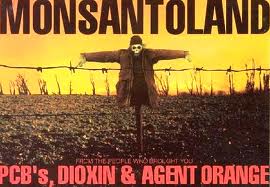
When people think of the loss of biodiversity over this time, most think about species extinction which makes losing a quarter billion (do the math) species somehow normal. Yet perhaps the most significant diversity loss, among our seeds to grow food, had been avoided thanks to the EU. Today the last barrier to a GMO world moves ever closer to devolving decisions to its member states to decide whether or not to complete the transition to a world where food is only grown with genetically modified seeds, a market 90% controlled by Monsanto. Like the war on brown people, another US government initiative, thanks Wikileaks. The country whose farmers are most in support of GM seeds? Poland. Not only should we worry, but don't, that we're increasingly relying on fewer strains of staple crops and driving Indian farmers to suicide but we should also remember some of their products from the past. Maybe you remember Agent Orange, bovine growth hormone and PCBs? And like Americans, when they take over, our choice will be taken away as we won't even know we're eating GMOs. Additionally, we not only use food like corn to produce ethanol but subsidize its production in a cycle of kickbacks. Anything to keep us burning fossil fuels. Heck, the decade even saw us increasingly believe oil company propaganda that scientists warning about climate change is simply fearmongering even as we completed the hottest decade on record while CO2 levels race past 390 parts per million. Did I mention the IPCC warnings in the past decade of increased climate volatility has normalized what's been happening from Moscow to Queensland?

Voices of complaint swearing it's the last time they'll take a train, they ARE buying a car. Everyone's happy, right? The train company can continue to increase their profit by stuffing the rest of us cattle, er, I mean losers without a car, into fewer and fewer wagons; the car companies get to sell another car and the oil companies sell more gas from which the government will earn some taxes; a financial institution, or two, maybe a bank and a specialized car financing firm, will also make money on the interest paid on the loan to buy the car. Little attention is paid to the fact god car costs more lives than even the other gods, a metal death box to cut them off from the rest of the world so as not to have to worry about the bikes they've forced off the road and pedestrians off the sidewalk so they can drive and park. Nor about the planet being forced to absorb and people having to breathe the noxious exhaust fumes or the soldiers and innocents dying in far away lands to ensure a steady supply of gas. The money spent by our government to maintain the infrastructure allowing them the pleasure to drive and park that could be put into alternate/public transportation. Think pedestrian over/underpasses, sidewalk snow removal and of course trams, buses and subways. This doesn't happen thanks to god car. EU directives forcing rail privatization are adhered to here in Poland while those requiring spending on a sustainable transportation infrastructure, 40% to rail and 6% to road, are ignored. Between 1998 and 2009 Poland spent about 108 billion zł on national roads and only 17.5 billion zł on the rail - 14% to 86%, easier math than counting cows, not crows, especially when they're falling dead out of the air everywhere, no matter how normal they tell us it is.

Privatization sounds great. Allowing capitalism and the invisible hand of the free market to make the world a better place. The problem is it doesn't always work; there are areas of the economy where the market delivers less efficient results than the state. These tend to be in areas where the public good delivered is greater than its monetary value such as health care, education and public transportation. Not even Margaret Thatcher, the iron lady scourge of state enterprise thought privatizing British Rail was a good idea. Its time had to wait until the neoliberal model was firmly entrenched, 1996, when British Rail was restructured into more than 100 separate businesses and sold off. A homogeneous bureaucratic structure became an interconnected array of contracts linking not only companies accountable to their shareholders but also to a complex regulatory framework set up to oversee the privatized system. With the private provision of infrastructure, however, there is a potential problem: introducing and maintaining competition. This potential problem can arise because of the so-called natural monopoly character of many infrastructure projects because a single firm can produce goods and services more cheaply than multiple firms (multiple ports, bridges, etc. at the "same" location are not economically feasible). Private monopolies must be controlled by public authority; but control means interference with private business, and interference begets corruption. Avarice inevitably leads to cases like the one in the UK where a privatized rail company was resold six months after being sold to investors. Nothing wrong with that, except the investors made a £300 million profit thanks to the government selling to friends for less than market value.

However, these are hard times financially. The lure of instant gratification is strong and there's a lot of cash to be made in these times of austerity, total proceeds to the UK government of the privatisation were UK£5.3billion. Yet one needs to look at the long range costs, not only in terms of service and comfort, but financial. Again in the UK, privatization has led to an increase in the cost of subsidies to keep the railways running, so much that the £5.3billion earned only paid for about three years of the increase! The theory seems to be that raising ticket prices will lower the subsidies as British rail passengers pay about 50% higher ticket prices than the rest of Europe which has led to a doubling in fares paid by the cattle since privatisation to £5 billion. But the total subsidy has risen even faster, reaching £6.3 billion by 2006, four times what British Rail received in a typical year when it was state owned. Other benefits seen: lower punctuality and reliability, neglected more dangerous stations, safety issues and possibly more rail crashes and deaths. Bring back British Rail, all is forgiven.

Now, what does an overcrowded train and the experience of British Rail have to do with Polish students today? Well, it could be nothing if one believes hard enough like Dorothy in the Wizard of Oz, or, more likely, it should serve as a warning of what's to come in Polish education, particularly as related to university fees. For those students in their second year or beyond, did you notice any change in your class sizes this year? Next year will bring even more students per class as the new normal of austerity takes hold and universities are forced to deal with dwindling funding. It won't take long for the national conversation to come around to the subject of charging tuition to attend state schools and once that taboo is broken, whispers of complete privatization won't be that far behind. Already, the growth in private higher education enrollment far outstrips that of public schools here in Poland. Again, the UK blazed a cattle trail for Poland to follow as with the release of the Dearing Report in 1997, their public universities introduced means tested tuition fees the following year. Fees were bumped a bit in 2004 and then the new Conservative government turned to John Browne, the former chairman of BP, apparently because they know so much about creating a sustainable future (!?!), for advice on the future of education. The Browne review led to a near tripling of fees to a maximum of £9,000; perhaps you saw something about this on the news last month as this sparked student riots in November and December that even, horror of horrors, saw Prince Charles' Rolls Royce get paint splashed on it. Remember, governments can afford to bail out banks but the cost of education is somehow beyond their reach.

Unsurprisingly, according to the 2010 Global Higher Education Rankings (PDF), in terms of affordability and accessibility Finland comes out first while the UK languished near the bottom even before the latest round of tuition increases. A once proud nation that offered free universal higher education, the UK will become an even more class-ridden society where somewhat ironically, only the rich are able to afford the education which is key to income mobility. Imagine that, a system designed to keep the rich rich and the poor, well, poor. I don't suppose you noticed the years when British Rail was privatized and tuition introduced to universities? 1996 and 1998. Hmmm, makes on wonder if one thing could have possibly had any bearing on the other. Or if the movement toward privatizing NHS in the UK is related to the whispering of hospital privatization here in Poland. Just underfund the hospitals forcing doctors to take bribes or stop working, then maybe the cattle will see the light and actually demand private health care so the corporations can get a shot at the billions to be bilked, or should I say milked. Even more ominously, British Education Secretary Michael Gove said the changes in his country amounted to the "fastest rate of education reform in English history" as the number of secondary schools with academy status has nearly doubled since the ConDem takeover last year, representing 11% of the nation's schools. Opening up teenage education to the profit motive should seem even stranger right after private firms demonstrated their ability to destroy the global economy just two years ago or how their drive for profits leads to corners being cut by companies like Mr. Browne's BP which are speeding up our destruction of the planet.

Unfortunately, the unsustainable gains of the past couple of decades may not only cost our future on this planet but have also created an equally unsustainable public debt which represents a theft of the financial future of today's youth. Paradoxically, we are more likely than ever to blame those who have fallen outside of mainstream life and contributed little to the threat for our economic problems while exalting the elites who have done the damage while receiving most of the benefits.With a tip of the hat to Naomi Klein's Shock Doctrine, it's past time to alert the cattle to the future they're being herded towards. Disasters, whether economic or environmental, man-made or natural, are the perfect cover for ideologues, be they neoliberal or neoconservative, to push through their policies while the public is distracted as they are forced to react to the conditions caused by upheavals. While Poland has been largely immune to the latest economic crisis, she has not only built up debt of her own but is also part of a larger unit, the EU, which is confronting a threat to its existence and therefore at the mercy of those who wish to gain from her plight.

We've been aware since at least Eisenhower's dire warnings of the industrial military complex of the threat posed to society when the public and corporate sphere collide and have only recently been hearing about a similar relationship between government and the financial industry. Yet we are still largely ignorant of the fact that society as a whole is becoming more and more subservient to corporate control through a growing symbiotic (or should I say parasitic) arrangement found everywhere we look in political and economic life. Milking us dry of the wealth that was built up by society and putting us more at risk; the snow removal problems in New York City underscores how reliance on contracting out work to private companies results in disaster. Even being aware of the growing influence, nothing is being done to halt the revolving door between the military and government contractors or the financial world and the policy makers so how are we to protect ourselves from the subtler shifts happening elsewhere? I'm not only talking about trains anymore, the technocrats are running the show and putting themselves and their buddies in place to be the only ones to profit on everything from the Euro 2012 football championships to the university classroom.

When Donald Tusk's PO party swept to power in 2007, one of the first things it promised to do was to embark on an ambitious privatization program. Their privatization plan for 2008-2011 came before the economic crisis hit the world, a crisis that saw Poland emerge as the soul European economy not to fall into recession. Yet the crisis has changed the playing field, capital available for investment has dried up thus lowering potential income to be earned from state sales while at the same time government finances have come under pressure. While other countries have opted for austerity, the Polish government seems to be aiming to improve its finances through growth and that means selling assets, no matter the price. It seems it only took a  global financial debt crisis for the country to trade its fear of Russia snapping up strategic assets for a fear of the financial debt sharks. Selling assets now, including last months successful stock float of PZU insurance company, Tauron energy and the Warsaw Stock Exchange, allows the government to temporarily plug the ballooning deficit gap which reached 7% this year. Being Poland, privatization still has a banana and pornography lure. Krzysztof Walenczak, chief economic advisor to Aleksander Grad, the Treasury minister who is spearheading the privatization campaign uses phrases like “it is about getting rid of the legacy of Communism” - “It is about completing our post-Communist revolution” and “It is about changing the economic ownership of the country, completing what Poland started 20 years ago.” The real question becomes, where does it all end? Once an asset is sold it's gone and while it may have temporarily fixed the problem, the budget deficit is still there so you've got to fix your finances or find something else to sell.

Worse, while the government is painting these sales with the brushstrokes of transparency, many are questioning just how clean the palette really is. While Poles may be enured to a process rife with corruption, they are told that if they really want to play in the international market they can't afford even the appearance that state-owned companies are being sold to firms controlled by politicians. Yet that is exactly what happened in the $1.3 billion initial public offer last year by power utility Tauron Polska Energia, during which state-controlled copper miner KGHM Polska Miedz bought 5% of the shares for an equivalent of $125 million. This was followed by the bid by state-controlled utility PGE to buy shares in its peer, Energa, for an equivalent of up to $2.5 billion. Recently, the Czech Republic's EP Holding offered the highest bid for a 51% stake in Enea SA, nevertheless, they have been eliminated from the process. German energy giant RWE, pulled out of talks, claiming that the price was too high while others expressed doubts about Poland's economic future after the country's government revealed that public debt was soaring.

Though Poland's economy seems to be thriving despite itself, posting a third quarter GDP gain of 4.2%, it's hard not to see that the country is careening towards the same economic disaster much of the rest of the world experienced just a couple of years ago. The headline in the newspaper heralds the 100,000 new investors who took part in the sale of the Warsaw Stock Exchange but forget to mention that their new investments only partially compensate for the New Year's Eve government resolution to shift private pension funds to social security in a "temporary" move to give more to the ZUS social insurance board. After all, the debt threat is like a bomb, tick, tick, tick. If you happen to be in the center of Warsaw you can even check out the new Polish debt clock.

Last year wasn't pretty for Polish transportation. The tragedy of Smolensk was the low point of a miserable year. It also saw the former Deputy Transport Minister, Eugeniusz Wróbel, most likely murdered by the hand of his son, dismembered, wrapped in wallpaper and thrown into the Zalew Rybnicki reservoir. We may never know as the case has been dropped against Grzegorz W., as he has been pronounced insane at the time of the murder. Less tragically, Deputy Infrastructure Minister Juliusz Engelhardt was dismissed by Prime Minister Tusk on December 21st which was quickly followed by the firing of the president of Polish Railways (PKP), Andrzej Wach on December 30th. Of course these moves won't do anything to stem the tide of privatization as we move towards a two-tier world of haves and have-nots. The profitable parts of the rail system will be sold off to friends and supporters while the rest of the system will be left to rot; babcia Krysia and wujek Józek traveling from Pcim Dolny to Wąchock will be out in the cold while the rich will be able to travel in high speed trains by the end of 2012 (just in time to miss the Euro championships). The 400 million price tag will be born by the tax payer but the benefits will surely accrue to the few. I've had the pleasure to watch this in Spain, where the introduction of the high speed AVE trains have had the side effect of pushing the cattle onto the buses as train ticket prices are now priced out of reach.

We seem to be caught in an Orwellian dystopia where we think we can turn off the telescreens but instead are constantly being sold the illusion of choice while our options have in fact been narrowed down to one. A tsunami of information is overwhelming our ability to process it all forcing us to shrink our field of vision and destroying our ability to concentrate. Private is more efficient than public, the unions are impossible to work with - only the corporations can save us money. Fundamentalists, both religious and the free market type, are the enemy of critical thought. We have been indoctrinated to believe that the free market, capitalism as it was once known, offers us more efficient results when in fact the opposite is often the result after adding in all the exorbitant salaries, bonuses, shareholder profits, marketing and political bribes that must be passed on to the taxpayer. These costs usually far exceed government waste, unless offset by egregiously low salaries that further harm the economy. In America, privatized Medicare Advantage costs taxpayers 17% more than government Medicare, which provides care to 80% of their seniors. Privatized Blackwater troops in the Mideast cost five times what U.S. troops cost. But Blackwater executives give campaign dollars and regular troops don’t, so what else would you expect?

Preying on our fears and manufactured desperation, the world is fast becoming a Market-State, where the public is being privatized, from the banks, energy and telecommunications to transportation and education. The rest is gifted to the global elite and the multinationals in the form of concessions from water rights to motorways. They’ll take state assets, say, roads, and lease them to a private company, which will then add tolls and recoup their investment in 10 years and pocket the profits thereafter. And part of those profits will go to the friendly politicians. Or the politicians will sell state-owned buildings and then lease them back so the private company can make the profits from the taxpayers. Monetizing every piece of our society's wealth for us to pay for, completely transforming the relationship between the citizen and State to citizen and the Market. A market absurdly composed in large part by the goods that the citizen was the owner - we are paying for structures and services that have already been paid for by us, our parents and our grandparents. The wranglers and night riders aren't jeans or talking cars but the corporate and government cattle herders driving us towards a future where we'll be choosing our firefighter and police services like our dry cleaners or take out pizza. The only escape is to muster the courage to completely change one's lifestyle and bolt from the herd which could be the flash of lightning, crackling of a stick or wolf's howl that starts the stampede. We better hurry though as we're being driven ever faster to the end of the cattle trail and I don't think we don't want to find out if ground beef tastes anything like Soylent Green.

Saturday, October 9, 2010

Coming to a Consensus

Way back in time, before there was Twitter, before the perpetual recession had come, in 2007 the International Monetary Fund (IMF) had a mere $2 billion in lending commitments on its books. Two billion. Avatar made that in seven weeks. That's the monthly increase in the cost of the Afghanistan war this year. From its inception at Bretton Woods in 1945, the fund had been transformed from an instrument to promote and facilitate trade between its member nations into an object of hate, letters spoken together with derision from Bangkok to Buenos Aires. Well, here we are in a world of two billion tweets a month with much of it stuck in near economic depression where the IMF has $195 billion in loans on its books. This week central bankers and finance ministers from around the world are gathering at IMF headquarters in Washington DC for the IMF and World Bank annual meeting and they'll be on their best behaviour. You see, with about $900 billion at its disposal, the IMF has been charged with saving liberal capitalism.

It's a mixed up muddled up shook up world as we stumble headlong into the second decade of the 21st century but what I'm finding hardest to swallow is the rejuvenation of the IMF's image. There was a reason it only had a couple of billion in loans a few years back; it had lost its legitimacy in the international community. It had morphed from a cold war tool to support dictatorships in South America into a neo-colonial boot across the throat of Africa before becoming a purveyor and destroyer of capitalist dreams beyond the Berlin Wall and finally the instigator of global economic turmoil even further east. By first denying credit to elected governments led by 'left leaning' types such as Allende, Goulart or Ortega who may not have followed Washington's orders then supplying it to dictators that overthrew them, the likes of Pinochet, Branco and Samosa, the IMF was a good soldier in the fight against the Red Menace. Countries such as Senegal have found they are better off following the Beijing Consensus to Washington's nasty version. Privatization and market liberalization that was gonna make everyone rich following the collapse of the commie regime was unleashed without the proper legal framework (read: government institutions, is that irony?) bringing the world Russian billionaire oligarchs, some of whom managed to move to London to buy football teams before the Putin authoritarian backlash. Others languish in prison. The last bit of credibility seemed to evaporate with the steam from hot money that poured into the opening of financial and capital markets ordered by the IMF as a remedy to East Asia's downturn in 1997 transforming a hiccup into worldwide crisis.

It's no coincidence that the three biggest debts on the IMF's books as of August 2010 belong to Romania, the Ukraine and Hungary each owing over $11.7 billion, almost six times the total of outstanding loans three years ago. October 3rd saw the 20th anniversary of the reunification of East and West Germany which heralded the triumph of capitalism over communism, good over evil, opportunity over captivity. Some 8% of the world's population that had lived under the Soviet Communist system traded in one form of enslavement for another as IMF experts marched in to preach the gospel of a new religion, market fundamentalism, as a substitute for the old, Marxism (Well, a twisted Leninism/Stalinism/Gorbachevism?). For the western powers (ie. the banksters) the sudden opening of an untapped, unregulated market was a once in a lifetime opportunity as it lacked the most fundamental building blocks of efficient markets such as anti-trust laws or property rights. This lack of government regulation allowed those who knew which vodka to buy Yeltsin (answer: any) to prosper as most of the population suffered. Americans saw shock therapy through the lens of Reagan's victory putting a McDonald's on Red Square while the reality was the percentage of Russians living in poverty using the $2 standard skyrocketed from 2% in 1989 to 23.8% less than a decade later. The IMF brought Mercedes traffic jams to Moscow but 40% of the country now had to live on less than $4 a day.

The IMF was created to smooth financial crisis when they occur yet seems to have been the cause of political and economic disease as often as the cure. Yes, Virgina, there have been other crises before this latest one and they are coming ever more frequently, powerfully and lingery. That's not a word, but they tend to drag on, with recoveries marked with ever less, and painfully slow, job creation. Our hopes for recovery are resting on the drug dealer of debt that turned many of us into junkies in the first place as much of the world is relying on the IMF pit bosses to keep the casino open. The next crisis is already written into the loopholes lobbied into the financial regulation bill in the US. The last not yet complete judging by ever widening bond spreads in Europe which highlight the uselessness of trying to save the euro by propping up PIGS with more debt and occasionally issuing reports on their progress to soothe jittery markets. An optimist will say the protests in Seattle in 1999 or the street battle in 2001 in Genoa may have lit the fire under the IMF to change its ways. But it seems just the names have changed in this truly grim fairy tale where only the banks get paid as we double down on SDRs instead of structural adjustment loans and implement austerity programs in place of job cuts.

Not being able to know who the bad guy really is helps keep us interested in the story and allows the cycle of crisis to continue. The Greeks, banks, Irish, Al-Qaeda and the government all played a role in putting us in a situation where cuts are going to be necessary along with tax hikes but the biggest baddie in the financial press these days seems to be China. Sure, China's on board, what with the G20 and now a Special Advisor to the Managing Director at the IMF, their cash is needed, but the boss is still European and Canada has a bigger vote than Russia, or Brazil and Mexico combined. The US still has a veto power with over 16% of the vote, as major policy decisions require a supermajority of 85%. For these past 20 years much of the world has gone along with what the IMF prescribed, often having no choice, accept or perish, but there has been growing evidence that there might be another path to choose and many are taking it.

About ten before the fall of the Berlin Wall, in 1978 the Chinese government began making economic reforms that have brought in a hitherto unknown combination of mixed ownership, basic property rights, and heavy government intervention. On the surface, what distinguished this new capitalism seemed to be the level of government intervention. While this is true, what surprisingly sets Washington and Beijing apart is flexibility. While America opts for nostalgia and ideology instead of pragmatism and progress, the winning model of capitalism is being made in China, like so much else in the world these days. A two-party political system is no better, in fact worse, than a one-party state when both parties are under the control of lobbyists and one of them is bought and paid for by a major media outlet. Whereas the neoliberals and neocons invade nations financially and militarily through loans and bombs in order to exploit their resources, the Beijing Consensus simply builds them infrastructure in exchange for their riches. Roads and hospitals for copper and rare earth metals. Risk capital instead of lives. Seeing the game slipping away, the west, America in particular, is trying to find a scapegoat, blaming the winner for playing the game better.

So we'll continue hearing a lot about the yuan (renminbi? still don't understand the difference) being undervalued while not criticizing too directly as we're still offering the open hand of the G20. After all, it'll be good to spread the blame when things fall apart. The Chinese understand that it wasn't American style management skills that made the US the global economic leader for the past century but a combination of luck and directing the resources of the country in a productive manner. Think of the big money makers of the past century and their connection with government. From the direct to the indirect in the big picture and in the details. Militarily not only conquering markets that needed to be rebuilt after winning world wars or friendly invasions but also directly employing and educating soldiers along with buying and selling all those weapons of war. Boeing, General Electric and Haliburton anyone? All this spending and the hydrogen bomb gave a head start to the computing industry and even gave us the internet. Detroit wouldn't have had the run it did if an interstate system hadn't been built to handle all those cars criss-crossing the continent. There's no secret to China's success, it's much the same recipe America used when it understood that since market forces cannot even do something as simple as finance home mortgages it shouldn't be trusted to restore and maintain full employment, reduce global imbalances or prevent the destruction of the environment while preparing for a future without fossil fuels. China's doing it while somehow being both more overt and less conspicuous. Not wasting energy pretending to be what it's not at home and forcing their ideas on others abroad.

The success of the Chinese approach to modernization has struck the developing world as attractive and the developed as amazing. As the calls to control deficits grow louder and governments are told to cut more jobs, raise retirement ages and lower subsidies while bailing out banks, the Chinese will keep building the things we need and using the proceeds to fund the debt the IMF has ensured we're addicted to. While Chinese Premier Wen Jiabao's in person offer of support to Greece (obviously in exchange for market access) was being gratefully accepted, the head of the IMF issued ominous warnings of a currency war being waged by those Chinese. In Europe the cracks are growing as "You can't have a monetary union without a reasonably coordinated fiscal policy" - Orwellian for a true supergovernment from that same IMF director, Dominique Strauss-Kahn. It gets worse in America where most of the public has been convinced that all things government or intellectual are bad - insert your own Palin 2012 vice presidential nominee here and imagine the outcome. Richard Nixon is attributed Milton Friedman's misquote that "We are all Keynesians now" after breaking the gold standard and reluctantly accepting John Maynard's economic ideas. The IMF was built upon that economist's ideas but I get the feeling that the next great shift in economics will have most of us saying "We are all Chinese now".

Friday, February 19, 2010

Who's Afraid of the Big Bad Wolf?

Is it all Walt Disney's fault? Maybe if we had all learned the original story of the Three Little Pigs instead of growing up with the Disney version we would know to be afraid of the big bad wolf. You see, in the original story the two lazy pigs who built their houses of straw and sticks were both eaten, whereas in the Disney version they run to their hardworking brother's house of bricks for protection. With all the talk of PIGS and Greece in the financial world today, it seems only natural to see the situation as an allegory with people, companies and nations representing the little pigs and debt as the big bad wolf.

If you haven't heard of the PIGS yet, it's an acronym for what are also known as the Club Med nations in the eurozone, Portugal, Italy (or Ireland if you listen to the Italians), Greece and Spain. All have been thrust into the international spotlight recently as their soaring debt, deficit and a slight credibility gap have been undermining confidence in the euro pushing it down from over $1.50 to around $1.35. The focus started out on Greece, but has now widened its spotlight onto Spain and Portugal bringing with it the huffing and puffing about default and the implications for the euro, a German/French bailout and good old moral hazard or an IMF rescue package and their wicked witch guidance.

Of course there's a variety of reasons for problems in the eurozone: loss of competitiveness due to eastward EU expansion, a sharp drop in tax revenue brought about by the financial crisis, lack of monetary policy options as they now don't have the option to devalue national currency - but the main problem is debt, too much of it. Yet, it's not like any of this happened at once, all three countries, plus most of the western world, have been running astronomical deficits for as long as I can remember. The IMF says that the G7 nations owed a combined $30 trillion US. So, what happened to make this a crisis? Fairy tales, like debt, have predictable story lines, so just follow the money to the beginning as we already know they end the same, night after night, empire after empire.

It's not surprising therefore that the Greek story seems a little repetitive as it parallels the events that led up to crisis 1.0 in 2008. Step one, create the illusion of stability. While the banknotes weren't issued until 2002, the euro came into being January 1st, 1999 when 11 countries took part in conversion day as rates between the euro and national currencies were irrevocably fixed. Greece wasn't one of the 11 as they failed to satisfy all the stipulations of the Maastricht Treaty. Then, as if magically, I love fairy tales, they did; becoming the 12th June 19, 2000. It's since been shown that the EU bought a pig in the poke as we learned in 2004 that total debt was over 100% and worse yet, deficits have been running well above 3% of GDP since the 90's every year except 2006. How'd they get away with it? Of course it was the big bad wolf, Goldman Sachs, and the magic of cross currency swaps.

Remember the wolf in last night's story where he created the illusion of security by bundling mortgages and other debts together, magically obtaining triple AAA ratings in order to buy cheap insurance from the AIG's of the world? Surprise! He also helped Greece to do the same thing. Much as Goldman knew they could rely on the US government to bailout corporate counter-parties due to their TBTF (too big to fail) status, sliding Greece into the eurozone ensured that the ECB (really Germany or France as direct European central bank intervention isn't allowed) would now be standing behind Greek liabilities. These days it seems the wolf also sells the building material to build our financial houses out of straw and twigs.

Cross-currency transactions are part of normal government refinancing as nations issue debt in dollars or yen, swap it for euro debt for a certain period and then exchange it back into the original currency at a later date. However, in Greece "around 2002 in particular, various investment banks offered complex financial products with which governments could push part of their liabilities into the future." Bankers devised a special kind of swap with fictional exchange rates which enabled Greece to receive a far higher sum than the actual euro market value of 10 billion in dollars and yen. Basically, Goldman Sachs secretly arranged additional credit of up to $1 billion for the Greeks disguised as a swap which didn't show up in their debt statistics allowing the books show in 2002 that the Greek deficit amounted to only 1.2% of GDP. After Eurostat reviewed the data in September 2004, the ratio had to be revised up to 3.7%. According to today's 2002 records, it stands at 5.2% (nothing compared to the 12.7% it had planned for this year). With bond maturities at between 10 and 15 years, it'll get even worse when Greece has to pay up for its swap transactions, while of course Goldman Sachs charged a hefty commission of $300 million for the deal and later sold the swaps on to a Greek bank in 2005.

In what amounted to a garage sale on a national scale, Greek officials essentially mortgaged the country’s airports and highways through a legal entity called Aeolos (god of the winds, they should of gone with Demeter to keep the pig theme) in 2001 which helped Greece reduce the debt on its balance sheet that year. In much the same way the wolf picks up the scent of a strapped homeowners forced to take out a second mortgage to pay off credit card debts, the Goldman pack has been stalking Greece to feed it's fairy tale debt habit. As late as November a team from Goldman Sachs led by president Gary D. Cohn arrived in Athens with a deal to create a financing instrument that would push Greek health care debt far into the future.

A similar deal in 2000 called Ariadne devoured the revenue that the government collected from its national lottery. Greece, however, classified those 'mythical' transactions as sales, not loans, despite doubts by many critics. The tide of fear caused by this uncertainty is now washing over other economically troubled countries on the periphery of Europe, making it more expensive for Italy, Spain and Portugal to borrow. For all the benefits of uniting Europe with one currency, the birth of the euro came with an original sin (sorry, I know mixing in biblical stuff now): countries like Italy and Greece entered the monetary union with bigger deficits than the ones permitted under the treaty that created the currency. Rather than raise taxes or reduce spending, however, these governments chose to artificially reduce their deficits by resorting to derivatives sold by and benefiting only the big bad wolf.

But are firms like Goldman really the big bad wolf? After all, they've done nothing illegal (so far, we think) and they're simply providing a service, supplying for a demand. They weren't doing anything wrong when they bundled junk debt into pretty packages, secured AAA ratings then bought insurance on default for low prices from companies like AIG. Neither was it illegal when they started selling those same securities short, causing their prices to fall and triggering massive contractual payouts from AIG when the value of the bonds fell below certain levels. They were simply playing by the rules of the game when they benefited from their timely trades and ensuing government bailouts. When will we sit up and take notice that the wolf is now as influential on the fairy tale genre as the Brothers Grimm? The same little piggy has roast beef whether the market goes up or down and the rest of us have none.

Much of that nasty debt that Wall Street bundled into pretty packages came courtesy of Main Street. Living within one's means sounds so simple; don't spend more than you can afford. Yet today's reality isn't that easy. Temptation is all around and folks need their flat screen TV's, new cars and homes to put all their stuff in. Governments play a roll here too; whether it's encouraging behemoths like Fannie May and Freddie Mac to give mortgages to people who can't afford them or offering tax incentives for people and corporations to take on debt; tax shields make corporate debt as much as 42% cheaper than equity. Individuals are able to write off all their mortgage interest, up to a million dollars, and companies can write off all the interest on their debt, but not things like dividend payments. Yet these incentives are clearly unnecessary; people will always need mortgages to buy homes, the deductions do nothing to increase home ownership while businesses already like debt as it offers leverage. The business-interest deduction, meanwhile, may lower an individual company’s taxes, but it also means that the overall corporate tax rate is higher, so its real impact is to give companies with lots of debt an unjustified advantage. So the system skews decision making in favor of debt and housing away from equity and other investment choices which magnifies risk making the economy more fragile and volatile.


Three Little Pigs from Guy Galer on Vimeo

The big bad wolf can even be re-branded; the leveraged buy-out firms of the 80's became the private equity firms of the 90's. Like the wolf in sheep's clothing though, the name change hasn't affected their modus operandi, company-flipping through debt which has squeezed the life out of any number of venerable companies and engorged many a Gordon Gecko. Sometimes they even set their sites on sports franchises. The Glazer family's purchase of Manchester United, the world's most valuable sports team, will provide a case study for future generations on how financiers enriched themselves while destroying our cultural icons. Thus far success on the field has managed to paper over the financial cracks but the creaking from the mountain of debt recently forced them to float a £500 million bond. While the demand for the bond issue was strong, it's only a matter of time until the interest payments (£325 million since the Glazier acquisition in May 2005) and the 'fees and loans' being issued to family interests sink the club. After all, you can't sell Cristiano Ronaldo to service your debt every year.

The wolf in Disney's Three Little Pigs was said to be an allegory for the Depression at the time of it's Silly Symphony 1933 release. Sadly, today's PIGS have been forced into responding to their financial woes by reducing many programs begun during that era; squeezing their people in order to keep the wolf from the door. Cutting social programs always come before financial reform or reducing spending on things like defense. Which of course brings us to the US, the Federal Reserve and it's magical printing press. Just as you fatten a hog before the feast, the US has been gorging on debt. With their 14 figure debt and $3.7 trillion deficit (yes just one year), optimistically it'll only take until 2020 for debt to reach 100% of GDP when yearly debt maintenance payments of 20% of GDP should be reached, a figure considered unsustainable.

Like a child believing this time the fairy tale will end differently, America and the neoliberal economic model are following the path of all empires. First, the ideology becomes corrupted and the believers lead us down an economically unsustainable model which inevitably forces the currency down until finally, military power loses its supremacy. Spending half of the world's total on defense every year won't help avoid the fate of the Habsburg's in Spain, pre-revolutionary France, the Ottoman and British Empires, or even the Soviets. Just google "Roman Empire economic collapse" to see how many results come up with the end of the American empire to see how most people think this story ends.

No government can ever balance their budget when the poor live hand to mouth, the working class and the middle class are mired in debt, and corporations and the wealthy can buy tax breaks and/or hide their money from the tax man in off-shore accounts. Yes, we need debt, without it we wouldn't have money apparently. Just as s a growing youth is said to have a wolf in its belly, it can quickly expand out of control; Einstein may or may not have said "compounding interest is the most powerful force in the universe". Conservatives rail against it while needing it to supply their pet projects and war machines, liberals feign concern while writing huge checks that necessitate it and all the while the balance of power in the world shifts inexorably east.

Financial regulation is the brick house that can protect us from the wolves. Having seen how their game of financial Armageddon chicken worked out in 2008 when the rest of the world blinked and handed over mountains of cash, this time the wolf has decided to stick it's snout directly into the carcass of sovereign nations. It's only America that can save herself and the financial world but she better act soon. Goldman Sachs and the gang are hunting ever bigger prey, taking an ever larger portion of the pie, living high on the hog if you will, while the rest of us make do with less. Breaking up the TBTF or limiting their size through taxation using ideas such as the Tobin tax on financial transactions is a first step. More importantly we need to change the consumption culture in which we simply make pigs of ourselves; here once again government can play a role by shifting to more consumption based taxes. If there's a moral to learn from this story it's that the only way to catch the wolf in the pot is to stop consuming more than we produce.

Thursday, December 31, 2009

From Nothingness to Everythingness

Can a decade really be nothing? One can always find bright spots, diamonds in the rough, hope for the future, right? After all, it could've never been if those Millennium Bug doom sayers we're right 10 years ago (just imagine my disappointment, waking up with a massive hangover on a beach on the equator in Ecuador, learning that the civilized world hadn't crashed down). While we may have misunderestimated the truthiness of so much we were led to believe, pwned by the meme that bling would bring us happiness, making us look like n00bs I feel some kind of recognition of the success of just having the decade is in order. Therefore today we'll look at the flip-side of nothingness, the top ten everythingnesses of the decade.

10. We haven't blown ourselves up yet, or otherwise completed self-annihilated. It's true, Kim Jong Il blew up a couple little firecrackers, but with over 20,000 warheads in their combined arsenals, Russia and the US could have caused a lot more damage. Negotiations are ongoing to replace the START treaty, which expired earlier this month, with a sitting US president who has stated his desire to see "a world without nuclear weapons". As was the case on July 31, 1991 when the original treaty was signed, the timing of a new agreement could help make the world a safer place. The original treaty was signed during the break up of the USSR and was instrumental in ensuring the Ukraine, Belarus and Kazakhstan were completely disarmed. Today, in order to have any leverage in negotiations with Iran and North Korea or any other nation, sharp reductions in the numbers of warheads in the world are necessary.

At the same time pressure must be brought to bear upon the US Senate to ratify the Comprehensive Nuclear Test Ban Treaty (CTBT). Article 6 of the Treaty on the Non-Proliferation of Nuclear Weapons states that each nation already possessing nuclear weapons "undertakes to pursue negotiations in good faith on effective measures relating to cessation of the nuclear-arms race at an early date and to nuclear disarmament, and on a treaty on general and complete disarmament under strict and effective international control". A strong commitment to reduce current warheads coupled with internationally agreed bans on nuclear tests and on the production of weapons-grade fissile material are desperately needed to avoid seeing the number of nuclear-armed states double in the next decade.

9. We not only speak in terms of trillions for dollars of taxpayer money given to banks but also volts thanks to those folks at CERN. A project that became more famous for it's end of the world potential and chronic problems seems to have finally hit its stride. They've spent the better part of the last 15 years and $10 billion dollars building the Large Hadron Collider (LHC), the world's biggest atom-smasher, a 27-kilometre long tunnel straddling the Franco-Swiss border. The goal of the project is no less than learning what the universe was like at the time of the Big-Bang and discovering what has become known as the God Particle, or the Higgs Boson, theoretically the provider of 70% of the mass of the universe. While no big discoveries have been made yet, they did manage to become the world's most powerful particle accelerator by accelerating its twin proton beams to 1.18 TeV (or 1.18 trillion electron volts).

It's been a strange ride for those wacky scientists over at CERN. The LHC's official start up a little over a year ago was accompanied by as many stories about the end of the universe as the beginning. Some went so far as to try to block it's start-up in court. But something funny happened on the road to discovery. Something kept going wrong. Ever since the British physicist Peter Higgs first postulated the existence of the particle in 1964, attempts to capture it have failed, and often for unexpected, seemingly inexplicable reasons. In 1993, the multibillion-dollar United States Superconducting Supercollider, which was designed to search for the Higgs, was abruptly canceled by Congress. In 2000, scientists at a previous CERN accelerator, LEP, said they were on the verge of discovering the particle when, again, funding dried up. And now there's the LHC. Originally scheduled to start operating in 2006, it has been hit with a series of delays and setbacks, including a sudden explosion between two magnets nine days after the accelerator was first turned on, the arrest of one of its contributing physicists on suspicion of terrorist activity and, most recently, the aerial bread bombardment from a bird.

All this got some deep thinkers deep thinking. In the same way that a coin couldn't keep coming up heads forever, it would be impossible for the LHC to keep breaking down for more and more absurd reasons unless something else was at work. In a twist on the Quantum suicide experiment, the theory is that the particle they are trying to create can travel back through time and undo the universe in such a way that the particle cannot be created. Or put another way, the fact that we exist now meant that the machine wouldn't work. So each time they tried to start it up something would happen to stop them. First a busted magnet then a stray bird, next a lightning strike or falling airplane waste; each time its stopped the series of events that stopped it would become more and more improbable. Alas, with the LHC now showing signs of fulfilling its destiny, perhaps it will disprove time travel at the same time it offers a glimpse of the beginnings of the universe.

8. Of course the LHC wouldn't have been as securely financed if the European Union experiment hadn't similarly moved forward a couple of unsteady steps, now featuring a boatload of new countries and a shiny new currency to boot. Up to 27 countries now and it's starting to look like it won't be one of the new countries this decade, 12 in all, that'll bring it down. Unknown to those member who joined this decade, Poland, Slovakia, Slovenia, Hungary, the Czech Republic, Estonia, Latvia, Lithuania, Cyprus and Malta in 2004 and lastly Bulgaria and Romania in 2007, the Trojan Horse had already been deposited.

Instead of trying to enter Troy with a huge wooden horse, the Greeks have built a mountain of debt that threatens to collapse the grand experiment. Of course it might not be the Greeks that bring about the unions demise, but being a Eurozone country, (as in using the Euro as currency, the new ones aren't, except for Cyprus, Slovenia and Slovakia, and of course neither is Great Britain, at least 'til the pound completely tanks) their imminent bond default is sure to cause some kind of domino effect. The biggest obstacle to a solution, besides the idiots being too in debt, is that EU members can't give bailouts to each other, only banks. Well, I guess they could bail out non-EU countries, doubt that's covered in the constitution. Added to the financial woes (Ireland, Italy and even Spain aren't all that secure at the moment either) is the specter of religious infighting, from abortion fights in the European court of human rights to crucifixes in school classrooms and of course the whole Turkey question. Oh yeah, the non-democratic constitution forced on us is rather off-putting as well. How did the EU get on this list again?

7. I'm not in Yemen anymore. Having spent part of the last decade there I think I got out while the getting was good. Hey it's my blog, so seeing as I chose to wind up in Poland, perhaps the only EU member to have avoided recession heading into the next decade, that's at least something, if not everything. Seems like the Yemeni government is in a world of hurt in both the north, going so far as to spill into the Kingdom, Saudi Arabia and south, where only a couple decades back they were independent of Sana'a. To make matters worse, America seems to have been reminded that Yemen is the home of al-Queda. Things have gotten worse by the day, to the point where some are calling it a third front of the 'war on terror'. Let's see, we've got a slow-motion oil spill, another slow-motion build-up to war, the slow-motion takeover of the world economy by the banksters, the slow-motion demise of the dollar, the slow-motion loss of national powers to the EU. Today I'll add one more - the slow-motion slide to a failed state. Yep, seems like the world may be left without a country beginning with 'Y' if things continue down this path in Yemen.

For years it has been seen as a safe haven for terrorists as most Americans would remember Yemen as the site of the terrorist attack on the USS Cole. Travellers know it as a place to avoid in case of kidnapping. Saudi's have known it as a place to steal land from to gain access to black gold. Somali's as a safe haven from complete lawlessness. Yemen, in it's current form hasn't even been around for 2 decades, having seen the North and formerly communist South, centred in Aden, unite May 22, 1990. Twenty unsteady years later and it appears to be coming apart from top to bottom. Up north, fighting has even spilled into, heaven forbid, the Kingdom of oil, the Bush's buddies, Saudi Arabia. The Saudi's were forced to retaliate after incursions by Houthi rebels, named after their leader Abdul-Malik al-Houthi, into their territory. Many fear they are being supported by the Iranians in an attempt to set up a Shi'ite state or perhaps just a Yemeni version of Hezbollah, a permanent thorn in the side of the oily kingdom. 

The US got nervous enough for Obama to order some of those pinpoint accurate cruise missile strikes earlier this month, you know, the kind that only kill around 100 innocent civilians. The situation has led to yet another international refugee crisis that few seem to care about, except for getting the last remaining Jews out of the area. Oh yeah, plus the country is sure to run out of water soon as it currently diverts more than half of this scarce resource to the raising of the national addiction even during drought. Yep, gotta keep the populace and soldiers high on qat all day, otherwise President Ali Abdullah Saleh might have a real uprising on his hands. Now the drumbeat of the war on terror is emanating from the US as it seems Umar Farouk Abdulmuttalab, the Nigerian suspect who tried to ignite explosive chemicals with a syringe sewn into his underwear aboard a US flight, may have been equipped and trained by an al-Qaeda branch in Yemen, AQAP. The US was already hunting Anwar al-Aulaqi, the radical Yemeni American cleric linked to the gunman charged with killing 13 people at Fort Hood, Tex., Nov. 5. Welcome to drone attack mayhem Yemen.

6. We've set the table for the world's next superpower. Ha! I can just see you rolling your eyes saying, "just what I need to read right now, another bit about China displacing the USA". Well, ha, ha, again. It's not China, in fact it's not even a country yet. "Whaaaaa? Shane's on the crazy juice again it seems." Nope, wrong again. Well, no more than usual at least. OK, here it is. Greenland. Yep, you heard me right, put all your chips on green for the next spin of the economic roulette wheel because folks, they've struck it rich in rare earth metals.

Oh boy, where to start. The misnomer 'Greenland'? How is it that Greenland is an island while Australia is a continent? What on earth is a rare earth metal? Shouldn't 'earth' be capitalized'? How can it be a superpower if it's not even a country? Questions, questions. First, yeah, it's a bit weird naming it green when 85% is covered in ice, apparently it was the first swampland in Florida type of real estate ploy, pulled off by Erik the Red back in 986. Second, here. Third, and finally we get to the gist of the story. Rare earth metals are:

A collection of seventeen chemical elements in the periodic table, namely scandium, yttrium, and the fifteen lanthanoids. Scandium and yttrium are considered rare earths since they tend to occur in the same ore deposits as the lanthanoids and exhibit similar chemical properties.
Fourth, no. And fifth, well, in case you missed it, Greenland is on the fast track to full-fledged nation status.

Fortunately, only questions two and five need to be examined closer today, and aren't we lucky, China will play an important part to the story. You see, while rare earth metals aren't really in fact so rare (another misnomer, great), about 93% of the world's supply is currently mined in China. Why do we care? For the simple reason that they are becoming more and more useful in today's technologies. They are essential in the production of smartphones, hybrid cars (the electric motor in a Prius requires 2 to 4 pounds of neodymium), precision weapons, catalytic converters, superconductors and low-energy light bulbs. China mines 99% of the output of the two most needed elements for these applications, dysprosium and terbium. The timing of the recent Greenland find couldn't have been more important as only a couple months ago China’s Ministry of Industry and Information Technology released a report which called for a total ban on foreign shipments of terbium, dysprosium, yttrium, thulium, and lutetium. The report, titled "Rare Earths Industry Development Plan, 2009-2015" also said other metals such as neodymium, europium, cerium, and lanthanum will be restricted to a combined export quota of 35,000 tonnes a year, far below global needs. Even crazier, Deng Xiaoping, then China's leader, gave us all fair warning as far back as 1992 saying, "There is oil in the Middle East; there is rare earth in China".

Denmark has ruled Greenland since 1776, only conceding limited home rule in 1979. It's been a long road towards independence and I'm sure that the irony of the fact that the melting ice has made the latest steps possible isn't lost on many. Remember, we're talking about the biggest island in the world here, so there's lots of good stuff being revealed by the retreating ice. Gold has been discovered and is already being mined, although so far at a loss, and there are deposits of other minerals such as zinc that could be exploited, and don't forget about the discovery of a 2.4-carat diamond at Garnet lake in west Greenland. Oil giants are negotiating licences to explore blocks of the coastline covering thousands of square miles. Although there are no proven sources, the US Geological Survey estimates there are 31.4 billion barrels of oil off the northeast coast alone. Greenland’s west coast may hold more oil than the North Sea, but harsh conditions could push the cost of extraction as high as $50 a barrel. Oh yeah, melting ice means water and therefore hydro-electricity. The vast lakes and melting ice cap provide enormous potential for electricity free from fossil fuel; in total Greenland holds 10% of the world's freshwater reserves. And now the discovery of rare earth metals.

All this has made independence a near reality as of June 22 of this year, when fireworks and celebrations in the capital, Nuuk, marked the latest step. Six months after 75% of voters (from a total population of 56,000 scattered over an area almost the size of Europe) said 'yes' to claiming control over all areas but defence and foreign policy. Under the self-rule agreement, Greenlanders will be recognized as a distinct people with the right to self-determination and Greenlandic will become the territory's official language. That means they now have full control of their natural resources which will be key to weening the country off the DKr3.4 billion ($590m) annual grant from Denmark which pays for public services like education and health care. Copenhagen and Nuuk have agreed to split profits earned from natural resources. For every two Danish crowns that Greenland earns, Copenhagen will reduce its subsidies by one crown. Greenland additionally will have control over its own justice and police affairs starting next June. As part of the new home-rule agreement, Copenhagen will also consult Nuuk when making foreign affairs and security decisions concerning the island. It may take a bit of time to rise to superpower status, but it's definitely no longer an option to buy Greenland outright, as America tried to do shortly after World War II. In any case, the going rate would be much higher than the $100 million the US offered the Danish government 60 years ago.

5. Americans, as individuals, are actually saving money as a country right now. Yep, maybe the crisis has taught the majority something as the rate, which subtracts what we collectively spend from what we make and then expresses the result in percentage terms, turned positive this year and was 4.4 percent in October. In 2009, it has ranged from a low of 3.4 percent in February to a high of 6.4 percent in May, which was the highest figure since 1993. Quite a turnaround from 2005 when the rate actually fell below zero! Alas, I fear it may be too little too late, like a heroine addict who just can't help himself, the country has dug a hole that may be impossible to get out of. Just last week the US Congress voted to temporarily raise the government debt ceiling to $12.4 trillion, but will need to do it again by February. Now, the US faces a trifecta of headaches: a mountain of new debt, a balloon of short-term borrowings that come due in the months ahead, and interest rates that are sure to climb back to normal. Like the smack addict, they've painted themselves into a corner by shortening the due date on the bills to lower the rate and will now have over $2 trillion in debt coming due in the coming months in addition to the estimated $1.5 trillion in additional debt financing they will need this year. It's no longer just the harbingers of doom prophecising the demise of the dollar, it's Greenspan himself, or at least Greenspan-Guidotti. Remember what happened to the economy when confidence was lost in the banks, try not to imagine what'll happen this year when the same thing happens to governments. How is this good again? Oh yeah, if you bought gold when it was only $1000/oz.

4. Panem et Circenses. Yeah, I know we have to put up with reality TV, but the oh-ohs (2000's, get it? mine, called it) also gave us tons of entertainment. From sports to film, books to music and some video games in between, we've been given some tasty pablum to trigger enough endorphins to keep us docile. Authors such as Orphan Pamuk, Zadie Smith and Khaled Hosseini have woven magical yarns. The Lord of the Rings trilogy wowed even the non Frodofiles on the big screen and we were treated to some bonus Bill Murray's genius and Amelie, even if it was impossible to get that soundtrack out of our head. The cure would've been Coldplay for many, but we also got some cool tunes outta OutKast, Daft Punk and Radiohead. Beyonce was pretty good to look at too. Throw in a Led Zeppelin reunion and the death of the King of Pop and music was covered. Sports team of the decade? The French national football team and Zinedine Zidane went from Euro and World Cup champions to headbutters and handballers, while Manchester United, Liverpool, Barcelona and AC Milan battled for club supremacy over here and probably those pesky Patriots of New England across the pond. Though I'm sure Red Sox fans would say otherwise having broken the 'Curse of the Bambino'.


3. Science is still pretty cool (and weird). Fifteen years after its discovery, Ardipithecus ramidus or Ardi, the oldest known skeleton of a putative human ancestor, was finally unveiled in 11 papers in print and online in October. The discoverers of the 4.4-million-year-old fossil proposed that she was a new kind of hominin, the family that includes humans and our ancestors but not the ancestors of other living apes. Another step towards the missing link, I know there isn't one, humans did not evolve from chimpanzees but rather through a series of progenitors starting from a distant common ancestor that once occupied the ancient forests of the African Micoene, but it's closer than Ida. This past decade also brought the mapping of us, the Human Genome Project, water missions on Mars and less spectacularly, our own moon, stem cells, commercial space flights, an explosion of planets, of the exo kind outside our galaxy and a new dwarf of our own, poor Pluto. While NASA's space faring potential is set to expire and then hopefully be replaced by Ares, interest in space has slowly been shifting to the private sphere as we saw the first space tourists while Virgin Galactic has inched closer to reality.

2. People Power. Yep, I'll throw the social media thing into this witches brew of good and evil, after all this is supposed to be about everythingness, and if it's anything, social media is everything these days. After all we started the last decade with a dot-com bubble and we ended it with the word 'unfriend' being the Oxford American Dictionary word of the year. Twitter brought us the Green Revolution in Iran, Facebook connected us with our ninth-grade girlfriend, Wikipedia told us everything else, Google not only became a verb it has also become as powerful as Goldman Sachs, and of course blogs and the rest of the internet has empowered us to such an extent that we, an all-knowing populace will be able to make informed decisions about our future.

Huh? What's that you say? People seem to be more interested in retweeting what music their friends are listening to and besides, it doesn't seem like the Green Revolution has brought the Iranian Revolution to an end, I guess it's tough when a mere 0.027% of the population use Twitter; Earth to Gordon Brown, Twitter cannot prevent another Rwanda. Your Facebook wall has become more important than your bedroom wall in expressing who your identity, becoming a black hole for your time, mind and ego. Wikipedia and Google are conspiring to make us stupid. Blogs have provided a forum for the semi-literate to spew their hate while the internet has heralded the demise of journalism. Instead of increasing the spectrum of ideas that users are exposed to, most choose to instead limit their sources of information to a narrow group of like-minded writers. With the huge problems the world is facing right now, progressives should be in position to move society forward, yet we still find ourselves in dangerous times as the bill for cleaning up the mess is still coming in. It may be forgotten that most of the problems of today, ranging from income inequality and lack of mobility, excessive debt, chronic underemployment to inaction on global warming and involvement in intractable wars are all problems to be laid on the doormat of the right-wing nutters. The disinformation experts are still spreading lies attempting to obfuscate the matter of who's to blame and seldom suggesting sane solutions; witness the rise of the warbloggers beating the drums of war, birthers trying to discredit a new president, death panel fear mongers, GW/CC deniers and their ilk.

Yet, it seems that all is not lost. We're still in early days, but there are some positive signs with former apostates of evil getting the message. Reagonomics architect Bruce Bartlett derides the Republicans one note cry of tax cuts. David Frum, who co-wrote with Richard Perle the standard neocon foreign-policy text, An End to Evil, wrote "I cannot be blind to the evidence that we have seen free markets produce some damaging and dangerous results in recent years. Or that the foreign policy I supported has not yielded the success I would have wished to see. Or that traditions must evolve if they are to endure". David Brooks has disowned Sarah Palin. Ronald Bailey saw the light on global warming. With the coming challenges to be faced by the world on climate and globalization and to the US specifically, spiralling debt, an aging population, intractable conflicts, the old answers will no longer solve the problems. No, the internet didn't cause stupidity, it just facilitates its dissemination. Imagine if the status quo had these intertubes back in the day to spread the gossip of the evil that introducing child labour laws, enfranchising women, creating social security and introducing clean-air regulation would bring about the end of the world.

1. Hope. Not the kind served up by the Barack Obama show, but the real kind, the one America voted into the White House. Sure, Time magazine has called the last 10 years the decade from hell, after all it led off with a stolen election in the home of modern democracy, saw a dot-com bust, wound through 9/11, Afghanistan and Iraq only to be topped off with the biggest financial crisis since the Great Depression. While this may look bad from an American perspective, it could be good for the rest of the world. Maybe it's a good thing that the last decade was so bad, coming just in time to save us from our own hubris. Perhaps we'll learn to look to ourselves instead of the stars and stripes as it becomes more and more apparent that its empire is in the stage of decline. At the very least, we should start to get the idea that we've going about things the wrong way for awhile now. Nathaniel Hawthorne wrote that “Human nature will not flourish, any more than a potato, if it be planted and replanted, for too long a series of generations, in the same worn-out soil”, it seems the soil of our beliefs needs to be changed.

We began the decade believing we, by that I mean the west, by that I mean America, were on the verge of truly becoming Masters of the Universe. Never ending economic growth, unchallengeable peace, limitless progress in all fields were within our grasp. Instead, the Dow opened the decade around 11,600 and will close around 10,500. Meanwhile, the BRIC nations and other emerging markets zoomed ahead. Cave-dwelling clerics now seem to pull the strings in a global game of whack-a-mole, a war on terror that has us in Iraq and Afghanistan with new fronts constantly threatening to open. While the US and to a lesser extent NATO fights, the Chinese are doing business, investing more in oil extraction in Iraq than the US while also becoming the highest source of tax revenue for the Afghan government. Maybe it's a good thing we've learned that our heroes, from Barry Bonds to Tiger Woods, weren't the ideals we should all aspire to be; that the market isn't infallible, sometimes we do need to be saved from ourselves, or at least Bernie Madoff; or that Elliot Spitzer - even Barack Obama - aren't going to be the ones to do it. Most articles looking back at the past decade either do so scornfully or confusedly, lamenting that we don't even have consensus on a name yet.

Once again, I say the oh-ohs, for while the past decade sucked, at least we recognize it, which is really the first step to fixing it. We've spent the last 10 years caught up in reality TV while being blissfully unaware of the illusions marketed to us from Iraq to the balloon boy. The fact is, from genetics to the environment, we are on the cusp of having the power to control or destroy our world in many novel ways, so it's a damn good thing we've been given a slap in the face that may finally wake us from our slumber. After all, the decade will end on a full moon and being the second one of the month, it's a blue moon, seems stranger things have happened?