Showing posts with label Poznan. Show all posts

Thursday, May 2, 2013

Thatcher's Poland

My mistake was not waiting to light my cigarette until after I'd passed the pawn shop. The lombard, as they call them here, opened only a few months ago but it's quickly become a favorite hangout for young and old alike. Bizarrely, you're just as likely to see a group of old fogies as a gang of kids ogling the phones in the window, dreaming of the day when they can afford to light up the screens with the slide of a fingertip to signal to the those around them they are worthy while sending and receiving signals from around the world.

As I hit the corner of the main drag, I suddenly remembered I needed cash. Lucky every other building is now a bank while the majority of those in between are oft-time ironically named cheque cashing joints like Happy Credit, mortgage brokers and aptly named kantors (foreign exchange) such as Joker Kantor, so cash was flowing free and easy. Well, apparently not for buddy who was on me like a fly on shit as I waited for the bank machine.

- "Daj mi papierosa" (Give me a cigarette) Came the predictable plea.
- "Jest moj ostatni" (It's my last) I tried to parry.
- "Give me cigarette"
Fuck. Something about my amazing (!?) accent had given me away making me both a prey and a mark.
- "Cigarette!" He barked.
My smoke was now the focus of both our attentions as I raised it to my lips and dropped it to my side. A couple of quick drags and I hand him the butt but he still doesn't budge.
- "One, two beer. How much?" Guess he's thirsty, too. After all it's almost noon.
- "I dunno, depends which" I answer, giving him a shoulder slap to his right shoulder while dodging to my right and slide into the bank machine as the previous customer walks out.

Cash in hand, smoke accoster nowhere in sight, I continued my walk towards first the train and then my work station beyond. As the flow of traffic peppered with the odd late model Porsche and communist era Polski Fiat 126p whizzed by I pass the Golden Arches just in time to see a herd of diabetic fat kids stream out the door, miraculously avoiding the two drunks splayed on the pavement leaning against each other for support as they dream of their next drink. Next up is the wheelchair beggar at his post just past the rail yard and in front of the trade center on the corner where I turn toward the university. Fortunately I'm shielded from his view as I pass by a gaggle of home decor/gardening/fashion enthusiasts clutching their conference bags filled with soon-to-be landfill waste and don't have to respond to his plea for the zloty (cash) he'd need to survive the next 24 hours.

Turning onto the bridge I walked past the newly completed portion of the train station, already covered in grime thanks to the pollution along with the road work and construction of the monstrous mall and even more ginormous parking garage that will be attached to the new Poznan train terminal. Wired gates control traffic at the end the bridge where the roadworks are most intense. Cars jockey for position from all sides as I emerged onto the zebra crossing with my usual contempt for motorized traffic. My second confrontation of the day comes when a car creeps up to my knee and we lock eyes, I point to the crossing and he starts yelling through his windscreen. Flipping him the bird I've already had two opportunities to fight and I haven't been out of the flat for 20 minutes.

That's when I found out Margaret Thatcher had died. I didn't have to wait to read about it in the obituaries or the newspaper, the words accompanied the beep that lit up my cellphone (fortunately I'm still holding onto my decade old Nokia brick and haven't yet needed to join the gawkers in front of the lombard).

"Ding dong, the witch is dead!"

Having come from a British friend that's all that was needed to convey the news. The fraction of a second it took for the impulse to smile to travel from my brain was long enough to allow the guilt for having such a feeling to arrest the curl of my lips before they'd even crinkled. I had to stop and look around. Here I was in Poland about to walk into university to teach a group of students whose parents most likely believe the Iron Lady was at least in part to thank for causing Communist USSR to crumble. The knowledge was more likely than not passed to their offspring subconsciously, like the information transmission of DNA, the kids probably don't even know what they, well, know. The terms Thatcher's Britain and Thatcher's child took no time to enter the lexicon and then the OED, and now standing on the corner with a Beyonce for H&M billboard to my left commanding women to buy her swimsuit or suffer social ostracism, if one's different, one's bound to be lonely, and a Szybcy i Wsciekli 6 (Fast & the Furious 6) billboard to my right reminding me of Thatcher's possibly apocryphal quote "[a] man who, beyond the age of 26, finds himself on a bus can count himself as a failure", I couldn't help wonder how much this was Thatcher's Poland.

"Who controls the past controls the future: who controls the present controls the past"
- Orwell, 1984

Upon noticing a book carried by one of my first Polish private students with Ronald Reagan on the cover, I was informed that Saint Ronnie along with John Paul II and Margaret Thatcher were his heroes: the holy trinity of freedom, a triptych of Maggie, Ronnie and JP2 on the mantelpiece of every good home. It's one of those things everyone here just knows just as I knew at that moment that Thatcher's passing wasn't going to go quietly; an information war every bit as deadly as the shooting kind she loved so much was already under way to remake her legacy, reframe the perspective and retard the rest of us.

Had she been a man, Margaret Thatcher could easily have been called Iron Balls as she had conviction in her beliefs if she had anything. Instead, thanks to her power to make most shrink around her, she was ironically given the nickname she came to love by the system she loathed. Accusing her of trying to revive the cold war, the Soviet Army newspaper Krasnaja Zvezda (Red Star) dubbed the then leader of the opposition železnaja dama (the Iron Lady) in January of 1976.

Seems as with everything else about Lady Thatcher, measuring the impact of her role in the fall of the Soviet Union is too subjective to measure, a hagiographic effort at best. Sure, after meeting Mikhail Gorbachev in 1984 she declared "We can do business together" and shortly thereafter the official party policy of glasnost was adopted in the USSR. However a near identical phrase "I think they can do business together" had been uttered in February of the same year by the American Senate Majority Leader Howard H Baker Jr. in reference to Reagan's potential meeting with the then Soviet leader Konstantin Chernenko.

Her bold assertions that there was no alternative nor any such thing as society, delivered in a tone both boring and boring, made her seem so decisive and divisive but when examined in context become wishy-washy and banal. Should we celebrate the life or death of a lady who may have had a hand in bringing about a Brave New World order by bringing down the (iron) curtain on our 1984 future? How does one shed a tear for a woman who had no qualms about ordering the death of hundreds of 'Argies' sailing away from a fight, not only allowed the US to station nuclear tipped cruise missiles on British soil to up the Cold War ante but also to use British bases for bombing raids on Libya, and above all, taught us to be selfish and that the pain of others isn't our problem?

But did she help save the Poles and the rest from communism? Unanswerable and doubtful but Poland's neoliberal lackey foreign minister Radek Sikorski eulogized her as a "fearless champion of liberty". We can guess how the Argentinians feel about how she saved the Malvinas. Barack Obama trotted out the obligatory praise saying she was "one of the great champions of freedom and liberty". Why don't we ask a Chilean if she helped or hurt their struggle against her buddy Pinochet by thanking him for "bringing democracy to Chile" by murdering the people's elected representative. I'm sure the tens of thousands murdered, hundreds of thousands tortured and million plus forced to flee Chile under his dictatorship would disagree.

The Economist magazine, bringing the tru to Minitru and where 2+2=5, eulogized "[t]he essence of Thatcherism was to oppose the status quo and bet on freedom", thus doing their part to ensure her support of the South African apartheid regime is lost down the memory hole. Not only did she once refer to Nelson Mandela's ANC as a "typical terrorist organization" while her spokesman said it was "cloud-cuckoo land for anyone to believe" they could run the country, she somehow worked the doublethink trick of projecting opposition to the racist regime while befriending then Premier P.W. Botha. She celebrated her friendship with Indonesia's General Suharto calling hime "one of our very best and most valuable friends" for having killed 500,000 suspected Communists in Indonesia before moving on to invade East Timor in 1975 to massacre around 250,000 men, women and children on the island. Her government helped arm Saddam Hussein, lent a hand to Pol Pot and hailed General Mohammed Zia ul-Haq's work in Pakistan that laid the groundwork for the Islamic radicalization of a whole generation.

Perhaps the greatest paradox of the woman was just that, she was a woman. In 1970, a week after becoming Secretary of State for Education and Science, she was asked if she would she like to become the first woman Prime Minister. "No," she answered emphatically, "there will not be a woman Prime Minister in my lifetime—the male population is too prejudiced." Of the movement and activists which possibly did more to change the 20th century than any other and opened the door to 10 Downing to her, she reportedly told an adviser, "[t]he feminists hate me, don’t they? And I don’t blame them. For I hate feminism. It is poison." In 1982 she said "The battle for women's rights has largely been won" which explains why she never felt the need to speak out against domestic violence, rape, sexual abuse or harassment or how women earned about 60 cents to the dollar of men's wages. She gave the appearance of smashing the glass ceiling while in fact pulling up the ladder, famously promoting only a single woman to a cabinet position preferring instead to surround herself with vegetables. Is it sexist of me to wonder how a mother of two could also become Maggie Thatcher the milk-snatcher by taking away kids' milk? Despite her portrayal as a greengrocer's daughter who had to fight to the top, she seems to have been a daddy's girl who married well which allowed her the luxury to study and hire a nanny.

Apologists rose to Thatcher's defense to claim her actions were a product of the times, the ends justified the means and of course, war is peace. Her sales pitch to a roomful of Saudis, "I'll have one of those!" while stroking a gleaming missile, to seal the $80 billion Al Yamamah arms deal wasn't meant for public consumption as 'batting for Britain' really involved billions in black money to bribe Saudi princes and add to the bottom line of BAE. Poles have learned Thatcher's buddy system well, er, well, the politicians at least, lining up to sacrifice lives and zloty to the alter of American military hegemony. Polish may have recently become England's second language but Polish politicians speak Anglo-Saxon ass-kissing as good as any lapdog. Most Poles are oblivious to the fact they ranked number four on the 'coalition of the willing' casualty countdown and just last month saw their 39th soldier killed in Afghanistan, while four more stand trial for war crimes committed there. Meanwhile the billions to be spent on a useless missile shield that the majority of the people don't want will piss off the Russians and definitely won't end up in the pockets of the locals.

"Non-stop distractions of the most fascinating nature...are deliberately used as instruments of policy, for the purpose of preventing people from paying too much attention to the realities of the social and political situation."
- Aldous Huxley, Brave New World

Thanks to doublethink, the lady wasn't for turning and probably believed in what she was doing but the real trick was to convince not just the people but her own party of the myth that Thatcherism was good for 'ordinary' people and would emancipate the working classes. Attila the Hen found an ally in Rupert Murdoch; she helped him consolidate his media power while he helped her spread the gospel and get reelected twice. The two protestant 'outsiders' who attended Oxford railed against the establishment which they became a part of by helping each other; he by having his tabloid the Sun shift its traditional support for Labour to Thatcher's Tories with a front page editorial arguing Thatcher’s election would be better for the working classes, she by allowing his acquisition of The Times and Sunday Times to avoid scrutiny by the competition authorities thanks to a deal struck during lunch at Chequers. While Thatcherism was tearing the heart out of the industrial heartland and looting the commons to hand it over to a tiny elite of 'wealth creators' who would free up the market and rain wealth on the land, Murdoch helped make sure there would be astonishingly little protest or consciousness by blaming the poor, promoting war and of course giving the people want they really wanted, more football.

The strength of ignorance is both easily built and desperately needed here in Poland. Caught so often on the wrong side of history and geography, convincing the Poles that there is no alternative to the current course has been an easy sell. Football, vodka and the Catholic Church allow the people to imagine they'll get to a better place as long as they keep their head down and work hard. Sure, they have the right complain and the array of choices seems as diverse as anywhere but the media landscape ensures the discourse never strays far off course. German companies like Axel Springer AG spew IngSoc, er, tabloid trash and EU propaganda with their version of the Sun, Fakt, alongside Dziennik and Newsweek Polska, American movies continually revise the past while TV portrays seemingly  possible present from the west or a poor simulation thereof and Radio Maryja spews xenophobic hate cloaked in the hope of redemption. The closest Poland comes to Murdoch is Adam Michnik, editor of the ofttimes leading national daily Gazeta Wyborca who somehow managed the trick of undergoing a conversion from a fearless dissident into a hack propagandist heralding the evils of Islamofascism and convincing women to go shopping on cobblestone streets wearing high heels (er, a forced reference to his paper's women's magazine Wysokie Obcasy - High Heels)

Maggie may or may not have been instrumental in delivering Poland and Eastern Europe from the Soviet Union but it was her amazing electoral success along with that of fellow cold war warrior Rotten Ronnie on the other side of the pond that sped the demise of democracy as we knew it. Yes, the unions they broke had too much influence on Labour and Democrat policy and no, it wasn't her or Raygun's fault those parties ran into the arms of Big Finance but there you are. Poland et al had the misfortune of gaining freedom just as the end of history arrived and democracy became nothing but a choice between  more or less measures of neocon and neoliberal, a lesser of two evil song and dance, a recipe repeated around the world from Ottawa to Warsaw. When asked about her greatest achievement, Thatcher simply replied, "New Labour" and Tony Blair. In Poland the answer would be the ruling Platforma Obywatelska (Civic Platform) and the likes of Oxford educated, husband of Washington Post hack Anne Applebaum, current foreign minister Radek Sikorski (not only did he write this drivel after Thather's death he called for a statue to be erected here in her honour, maybe right next to Reagan's in Warsaw!). Politics have become subordinate to markets and labour to capital, society now serves the economy instead of the other way around.

"All for ourselves, and nothing for other people, seems, in every age of the world, to have been the vile maxim of the masters of mankind."
- Adam Smith, An Inquiry Into the Nature and Causes of the Wealth of Nations

It's this last point which is probably the most important connection between Thatcher and life here in Poland, freedom is slavery. Sparked by the Powell Memo in 1971 and lent an aura of intellectual legitimacy by the Chicago Boys, a new economic ideology was propagated through institutional sponsorship: America has the Heritage Foundation, the Cato Institute and the American Enterprise Institute while the UK's versions include the Adam Smith Institute, the Institute of Economic Affairs and the Centre for Policy Studies founded in 1974 by Thatcher's mentor, Keith Joseph. Despite their benign sounding names, these are radical think tanks with almost nothing to do with the likes of Adam Smith who understood something about Moral Sentiments and the dangers of private monopolies and everything to do with Hayek, Friedman and Rand and their belief in extreme individualism or social Darwinism. Nigel Lawsen, Thatcher's Chancellor of the Exchequer from '83 to '89 summarized their economic philosophy, "Economic planning was both impossible and unnecessary. . . . The price mechanism . . . was a much more efficient means of transmitting consumer wants and needs than the vast bureaucracies of Whitehall and the nationalized industries." Selfishness along with ostentation of power and status was in. Culture was ruled over by money, and the idea that those who win by making more of it do so because they are better was not just permitted but ordained.

Profit and capitalism were good while planning, government and taxes were bad. Conveniently this all worked together as in order to lower taxes, public spending had to be lowered which scaled back government by reducing public services, privatizing whatever was possible and deregulating the rest. Inconveniently most voters viewed the government as subsidizing essential public services, ensuring economic security and helping families in need. The trick therefore was to create a backlash against government waste, resentment against public subsidies to those who were less hard working than themselves and place the blame for inflation on greedy unions. Notice the success as the issue of benefit fraud, which costs the UK about £1.2 billion yearly is a far more emotive topic than tax avoidance, which costs about £70 billion a year. Voters also needed to be convinced that what was taken from the state was being given to them thus enhancing individual economic freedom and unshackling the wealth creators, allowing the wealth to trickle down on everyone. The only valid idealism was to destroy the state by, as Lawson continued, "elevating private actions above public direction and dismissing ‘social justice’ as both vague and arbitrary." Finding bad reasons for what one believes for other bad reasons - that's philosophy.

Thatcher was swept into power on a perfect storm of global inflation emanating from the US pushing up world prices, IMF imposed austerity in exchange for loans to support the value of sterling after Britain's 1976 foreign exchange crisis which made it impossible to finance the modernization of public industries as it would increase the PSBR (Public Sector Borrowing Requirement), and finally, well, strikes and weather, otherwise known as Britain's Winter of Discontent. Yes, a public sector strike during an unusually cold winter ground the country to a halt, literally, as roads went unsalted, hospital patients were denied treatment and garbage piled up in the streets. Labour, who had tied themselves to those striking unions, found themselves with their hands also tied behind their back. Thatcher picked and chose her battles with labour wisely and pursued a step-by-step program of trade union reform before ultimately crushing them in the '84-'85 coal miners' strike. There was indeed no alternative to the monetarist Thatcherism which created an employers' market by imposing chronic under-employment and shifting enterprise out of the unionized public sector to newly privatized, non-unionized enterprises; Marks and Spencer had triumphed over Marx and Engels.

Ironically, or perhaps just calculatingly mercenary, while destroying unions and solidarity at home she was lionized by Solidarność (Solidarity) in Poland, actually being mobbed by dockworkers in Gdynia when she visited in 1988. If you've gotten this far in reading it hopefully means you realize I understand there was a difference between unions in the UK and Poland, after all, in Poland the military used to shoot striking miners dead. Given the trade unions' role in the democratization of Poland it is curious that Poland today has among the lowest unionization rates in Europe as from 1982 until 2005 membership fell from 80% to below 14% (only  2.4% for employees under the age of 25). There are myriad of factors at play here, from the many mistakes made by the unions themselves, a massive shift of the workforce from traditional industries and sectors such as mining and steel, and the privatization of many formerly public, union dominated industries, but it was the pernicious effects of Thatcherism on human psychology that seem the greatest factors. The transformation of the full-employment ideals of post-WWII society to an economic system based on chronic un- and underemployment has made many afraid of forming or joining a union along with the societal appeal to the narrowest self-interest of individuals having gained the upper hand over the feeling of brotherhood and the desire to work for the collective good.

Thatcherism also slowly shifted the balance of power from labour to capital through tax and monetary policy, privatization and deregulation. She managed to destroy more than 2 million jobs in two years, an astonishing figure considering unemployment only breached 1 million in 1978 before reaching 3.5 million by 1983. Her monetarism lowered everyone's taxes a bit and 'simplified' the fiscal system by regressively shifting taxes away from wealth onto consumers via sales taxes, excise taxes and the value-added tax. With public institutions being starved by austerity, privatization was the only way to modernize. "Popular capitalism", spreading ownership as widely as possible, would serve the double purpose of making it difficult to re-nationalize in the future plus giving the public skin in the game, giving workers a stake in preserving the value of the shares they held in these enterprises. The discipline of the market would make British industry more competitive but its effect along with deregulation of the financial industry, the 'Right to Buy' scheme of 1980 and the 'Big Bang' of 1986 simply handed over complete control of the British economy to the square mile in the heart of London, the City.

Privatization, which started tentatively in her first term with British Aerospace and Cable & Wireless, had reached fever pitch by her second reelection: Jaguar, British Telecom, Britoil, British Gas, British Steel, British Petroleum, Rolls Royce, British Airways. Her fourth term (well, John Major's first) saw British Rail hit the auction block. By the time the Conservatives were voted out of office in 1997 by one of the largest margins in history it had become clear to the public that there were some side-effects to the medicine they were being forced to take. Prices hadn't declined along with productivity gains in some areas while they had jumped for essential services like water whose systems were breaking down or shifted against residential consumers in favor of large industrial users in the case of electricity. Services had been cut back, privatized companies were engaging in monopoly practices and to add insult to injury economic inequality had widened with the shrinkage in the industrial labor force and stagnating real wages while profits soared for the privatized companies and the City fleeced the government for underwriting fees and began gambling in earnest thanks to the newfound market freedom. Thatchers reply? "Let us glory in our inequality."

"Democracy is the theory that the common people know what they want, and deserve to get it good and hard."
- H.L. Mencken, A Little Book in C Major

Pity the Poles for having gained their freedom at the height of Thatcherism, imagine how different the future would look had it been in, say, 1968? As it was, having been tried and tested by Thatcher's buddy Pinochet in Chile, the Chicago Boys idea of "Shock Therapy" came to Poland in the person of Leszek Balcerowicz in 1989 under the guidance of Harvard's Jeffery Sachs backed by the muscle of the IMF. Doubtless, drastic measures were called for to make the huge transition that was complicated by the fact Poland was an economic basket case, with debt of $40 billion and inflation running at 600%. Also doubtless, the Balcerowicz plan was a success when compared to the results achieved in some other Eastern bloc nations. Forgotten though is the doublethink trick achieved of forcing a now 'free' democratic nation to trade off part of the debts incurred by a totalitarian regime it had never voted for in return for selling off state assets at discount prices for the benefit of foreigners and those highly place communists who were quick enough to convert to the new religion. Who cares if it was completely undemocratic, Balcerowicz termed it "extraordinary politics" while Michnik warned that the common people or "rank and file...irrational hotheads [were] incapable of recognizing the limits and realities of the real world". Those in position to do so stripped all the assets they could, a $1 billion stabilization loan (aren't numbers from the olden days quaint?) was arranged, large blocks of shares of privatized assets were placed in the hands of banks and Poland was absorbed into the global slavery debt trap.

The only goal of the IMF/Sachs/Balcerowicz policies was to ensure payments continued to flow west on the $40 billion in illegitimate foreign hard currency debt (what would be called odious debt today). Much of that debt had been incurred in 1979 when rates in London and New York increased 300% under the policies of, you guessed it, Margaret Thatcher and US Fed Chairman Paul Volcker. By the end of '91, Polish unemployment had reached 2 million, industrial production was 66% of the '89 level at the end of '92 and as 1993 closed 2.8 million were unemployed and 50% of families with 3 or more children were living below the poverty line. Little wonder that elections held in September of 1993 saw the the pro-IMF government of Hanna Suchocka replaced by a raft of coalition parties with direct ties to the communist regime. Predictably, as inequality elsewhere surpasses levels unseen since the roaring '20s, the new grand bourgeoisie that has emerged here has combined old bureaucrats, new managers and a burgeoning entrepreneurial class; a situation reminiscent of Poland in the 1920s. Perhaps the best symbols of what Poland got in return for the misery, organized crime, and debt-based slavery brought by the 'reforms' are Galeria Mokotów (Mokotów Mall) in Warsaw and Stary Browar (Old Brewery). The former, a shopping center built in place of a demolished semiconductor factory, cuz, you know, who needs those in a modern economy when you can create another black hole to suck wealth out of the local economy, and the latter a mall built on bribery (Polish link) and murder involving the richest man in Poland.

"The law, in its majestic equality, forbids the rich and the poor alike to sleep under bridges, to beg in the streets, and to steal bread."
- Anatole France, Le Lys Rouge (The Red Lilly)

Ah yes, the riches and glory promised to Poland are coming but as in the rest of the world more and more disproportionately to those at the top of the income scale. It would take a figure  stronger than Thatcher to convince Poles they are on the wrong course though as they are pumped through the indoctrination centers that are the education system. They emerge believing they have free will and as unquestioning of the free-market god as their forefathers were in the Catholic one unaware that one believes things because one has been conditioned to believe them; soma is simply Christianity without tears. The trains are slow, late and chaotic not because they're being sold off piecemeal on EU orders which is creating the disarray, but because it's not fully privatized like the UK's, who cares about their disastrous experience. The long waits at NFZ have nothing to do with it being underfunded, the public health care system isn't a blessing but a curse as promoting preventative medicine instead of the Americanized version of health for profit resulting in worse health outcomes and higher costs must be better as it's the path the Cameron government is choosing as they privatize the NHS by stealth. Oh, and don't worry Polish kids, it's only a matter of time until the course laid in leads to a completely privatized American-style college system of trillion dollar debt slavery before you've even entered the workforce. Just ask any 20-year-old Brit what it's like

Would the UK and Poland be much different if Thatcher had never been? Maybe not seeing as even the EU, the institution that most separates Maggie and Poland, has become nothing more than a glorified debt collector/pusher a fact not lost on most Poles as they become more disenchanted with the concept as their democracy ages just as Thatcher did. Even the Iron Lady, as she mentions in her autobiography, was caught off guard at how much she came to rely on the financial manipulators, how little she was able to control them and the scale of those bankers' greed; she convinced us to sell the family silver for the benefit of the rentiers who perceived the Thatchers and Friedmans as pawns, well-meaning promoters wrapping austerity economics in populist garb. Unfortunately, the deleterious social effects of the inequality caused by growing GDP through financialization of the economy, empowering those banks and other corporations to pursue profit without paying the price for wrongdoing and turning people into consumer zombies takes years to measure and decades to be felt. Trillions in wealth will continue to by siphoned out of the productive economy while we are forced to run faster and faster just to keep up and are convinced that our phone has somehow made us smarter. Yet while there is always time to get off the tracks before the train hits there's not much chance of heeding the warning the more we come to rely on those who profit from us being run over.

Saturday, January 8, 2011

Cattle Car Cronyism

Editor's note: Cross posted on the Polish student's site Kontra - thus the occasional Polish student reference and Polish links


Thanks to the internet and Orwell's Animal Farm, I've always thought of people being like sheep, sheeple having become a common blog buzzword and the tendency of people to move in flocks like, well, sheep. On the train somewhere between Warsaw and Poznań though I decided we're more cattle than sheeple. It was my fourth train of the holidays and second in which I'd paid for the pleasure of being transported hundreds of kilometers across Poland standing shoulder to shoulder with dozens of my fellow passengers. A nation's railways offers a physical manifestation of the building of its infrastructure and national unity and likewise offers a powerful symbol as society is broken up and sold off to the highest bidder. The trick of course is to make people think they want the changes so they practically drive themselves down the Chisholm Cattle Trail. Among the fifteen of us herded into the small space between the doors and the bathroom, there was strong evidence this battle has already been won, "PKP, (enter own expletive here)!" - no F-words of course like in the world without the N-word, just lots of k...a "peppered" about; or "This is the last time I'm ever taking a train, we're buying a car". Seems the "craving for bananas and pornography" that western capitalism promised to satisfy in exchange for the security and stability (more or less) guaranteed by the Communist regime wasn't so much a noble struggle for freedom and justice as a race to give it all away to the rich and powerful.

Faces squashed up against the window as a couple of ladies make a vain attempt to reach the bathroom - "Zamknięte!" Not only closed but it stayed that way the whole trip, four hours for me (scheduled three) but for all I know the whole width of Poland, a nine-plus hour odyssey from Białystok to Szczecin via Warsaw and Poznań. Catching glimpses of a similar scene in the next cattle car it was clear to see that the management of PKP had chosen to run a train which supplied about half of the demanded seating; six wagons would have served better than three. Passengers with tickets become branded bovines and the more heifers, bulls and calves squeezed in per car, the more money there is to be made. What was once a public utility to serve our needs has become a hideous hybrid of corporate/government control to serve one paymaster, profit. Under a European Union directive the state owned railway - Polskie Koleje Państwowe (PKP) - was splintered, dividing transport service from rail system management and founding separate companies able to sell their service outside the rail business.

While PKP SA remains the dominant company in PKP Group maintaining 100% share control and full responsibility for the component companies for the government, several of the pieces are now in private hands. This my friends results in Candide's nightmare, the worst of all possible worlds, where profits are privatized and losses are socialized. In other words, when gains are realized, they fall into the hands of the lucky few whereas when setbacks occur, we all have to pay. Not just in money but efficiency as the scheduling of trains must be coordinated among many parts with competing interests. The 2011 Polish Railway Timetable was to be published two weeks before implementation (making it hard to book a couple of months in advance for discounts) wasn't released until early December and even then still had significant differences between the times that the trains were running according to the printed timetables and the times that the trains actually run. In Germany they must and are published six weeks ahead of time. The chaos is predictable as it's impossible to figure out who's in charge of what when such an intricate web of station, platform, power, train owner/operators has been created to disguise the money flowing around the system.

Being so cramped, it was hard to turn around and get a look at everyone while trying to remain upright as there was even less foot space thanks to the holiday luggage lugged aboard. This forced me into the awkward lean over the bag onto the wall position for much of the trip, alternating between resting on my forehead and hands. An observer would laugh watching the contortions and dance steps required to be coordinated with overhead duffel bag passes as people tried to get off and on at each stop. Mostly off, thanks to the lack of space and our door guy. Of all the 14 people, I'll remember him and his girlfriend most fondly. When three people got off, he made sure only three got on. Plus his girlfriend and him looked right out of an American college; I'd have mistaken him for a quarterback and her for a cheerleader if they weren't speaking Polish, mostly about cars and school from what I could make out. There was the young lady left be-hind/side of me who insisted on reading almost the whole trip and the largish teenage girl to my back right who was more partial to eating.

Being poked in the ribs with a Carlos Ruiz Zafon hardcover while getting an earful of Snickers lip smacking couldn't be all that different than getting hoofed by Daisy while listening to Elsie chew her cud. We also had a couple of young guys just behind them into their phones and gadgets while further back a couple of older guys were more into their bottles of beer. Their ringtones mixed with the rest of the wagons' to mimic the lowing of cattle in my imagination while I tried not to think about how cattle feel standing in each other's excrement. That would have meant not wondering if the old-timers' livers were swollen enough to avoid needing to refill their bottles - nor about the other hundred or so people without access to a bathroom! A couple of older ladies around the bend next to the compartment door were the only other co-passengers who were with me the whole trip while dozens squeezed in and out temporarily staying or in transit. Of them I only caught their reading material, unsurprisingly gossip magazines filling their imaginations with stories of Hollywood stars, cows grazing in the pastures of ignorance while people filed by on and off, to and from the slaughterhouse.

In just twenty short years since the fall of communism, Polish society has made amazing gains. People needn't stand in day long lines to obtain the necessities of life and are free to join in the democratic process. Yet there seems to be little difference between this behavior under communist authoritarianism and that under market authoritarianism. Democracy gives us the right to vote in our leaders as long as we cross one of the offered boxes, thus putting in power someone who was in fact chosen for us. These leaders in turn determine which state assets should be sold off and how they are auctioned off in a process that buys off political and economic influence. Therefore the majority of those aforementioned gains have been disproportionately distributed in an economic system that favors the rich and powerful in such a way to make it easier for them to take an ever greater slice of the pie.

While most believe the most amazing feature of today's world is the speed at which technology is changing our lives, what dizzies me is how quickly things become normalized into culture. Just the last decade has brought an onslaught of both. Take the mobile phone (please!). People peering, tapping, listening and shouting into phones, sharing news and views with everyone within earshot and even more amazing, our ability to (try to) ignore it has become a normalized ritual; what's more we happily pay a slice of our earnings to have the device control our lives and need to lay out for an upgrade at least every couple years. To drink water we happily buy petroleum-based plastic bottles to add to our expanding landfills. It's normal to participate in an endless, unwinnable war by sending 2600 Polish troops to Afghanistan where they are "just kind of hanging around"; whatever, only 22 have been killed.

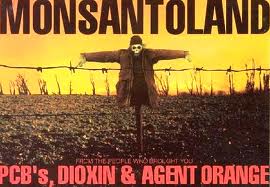
When people think of the loss of biodiversity over this time, most think about species extinction which makes losing a quarter billion (do the math) species somehow normal. Yet perhaps the most significant diversity loss, among our seeds to grow food, had been avoided thanks to the EU. Today the last barrier to a GMO world moves ever closer to devolving decisions to its member states to decide whether or not to complete the transition to a world where food is only grown with genetically modified seeds, a market 90% controlled by Monsanto. Like the war on brown people, another US government initiative, thanks Wikileaks. The country whose farmers are most in support of GM seeds? Poland. Not only should we worry, but don't, that we're increasingly relying on fewer strains of staple crops and driving Indian farmers to suicide but we should also remember some of their products from the past. Maybe you remember Agent Orange, bovine growth hormone and PCBs? And like Americans, when they take over, our choice will be taken away as we won't even know we're eating GMOs. Additionally, we not only use food like corn to produce ethanol but subsidize its production in a cycle of kickbacks. Anything to keep us burning fossil fuels. Heck, the decade even saw us increasingly believe oil company propaganda that scientists warning about climate change is simply fearmongering even as we completed the hottest decade on record while CO2 levels race past 390 parts per million. Did I mention the IPCC warnings in the past decade of increased climate volatility has normalized what's been happening from Moscow to Queensland?

Voices of complaint swearing it's the last time they'll take a train, they ARE buying a car. Everyone's happy, right? The train company can continue to increase their profit by stuffing the rest of us cattle, er, I mean losers without a car, into fewer and fewer wagons; the car companies get to sell another car and the oil companies sell more gas from which the government will earn some taxes; a financial institution, or two, maybe a bank and a specialized car financing firm, will also make money on the interest paid on the loan to buy the car. Little attention is paid to the fact god car costs more lives than even the other gods, a metal death box to cut them off from the rest of the world so as not to have to worry about the bikes they've forced off the road and pedestrians off the sidewalk so they can drive and park. Nor about the planet being forced to absorb and people having to breathe the noxious exhaust fumes or the soldiers and innocents dying in far away lands to ensure a steady supply of gas. The money spent by our government to maintain the infrastructure allowing them the pleasure to drive and park that could be put into alternate/public transportation. Think pedestrian over/underpasses, sidewalk snow removal and of course trams, buses and subways. This doesn't happen thanks to god car. EU directives forcing rail privatization are adhered to here in Poland while those requiring spending on a sustainable transportation infrastructure, 40% to rail and 6% to road, are ignored. Between 1998 and 2009 Poland spent about 108 billion zł on national roads and only 17.5 billion zł on the rail - 14% to 86%, easier math than counting cows, not crows, especially when they're falling dead out of the air everywhere, no matter how normal they tell us it is.

Privatization sounds great. Allowing capitalism and the invisible hand of the free market to make the world a better place. The problem is it doesn't always work; there are areas of the economy where the market delivers less efficient results than the state. These tend to be in areas where the public good delivered is greater than its monetary value such as health care, education and public transportation. Not even Margaret Thatcher, the iron lady scourge of state enterprise thought privatizing British Rail was a good idea. Its time had to wait until the neoliberal model was firmly entrenched, 1996, when British Rail was restructured into more than 100 separate businesses and sold off. A homogeneous bureaucratic structure became an interconnected array of contracts linking not only companies accountable to their shareholders but also to a complex regulatory framework set up to oversee the privatized system. With the private provision of infrastructure, however, there is a potential problem: introducing and maintaining competition. This potential problem can arise because of the so-called natural monopoly character of many infrastructure projects because a single firm can produce goods and services more cheaply than multiple firms (multiple ports, bridges, etc. at the "same" location are not economically feasible). Private monopolies must be controlled by public authority; but control means interference with private business, and interference begets corruption. Avarice inevitably leads to cases like the one in the UK where a privatized rail company was resold six months after being sold to investors. Nothing wrong with that, except the investors made a £300 million profit thanks to the government selling to friends for less than market value.

However, these are hard times financially. The lure of instant gratification is strong and there's a lot of cash to be made in these times of austerity, total proceeds to the UK government of the privatisation were UK£5.3billion. Yet one needs to look at the long range costs, not only in terms of service and comfort, but financial. Again in the UK, privatization has led to an increase in the cost of subsidies to keep the railways running, so much that the £5.3billion earned only paid for about three years of the increase! The theory seems to be that raising ticket prices will lower the subsidies as British rail passengers pay about 50% higher ticket prices than the rest of Europe which has led to a doubling in fares paid by the cattle since privatisation to £5 billion. But the total subsidy has risen even faster, reaching £6.3 billion by 2006, four times what British Rail received in a typical year when it was state owned. Other benefits seen: lower punctuality and reliability, neglected more dangerous stations, safety issues and possibly more rail crashes and deaths. Bring back British Rail, all is forgiven.

Now, what does an overcrowded train and the experience of British Rail have to do with Polish students today? Well, it could be nothing if one believes hard enough like Dorothy in the Wizard of Oz, or, more likely, it should serve as a warning of what's to come in Polish education, particularly as related to university fees. For those students in their second year or beyond, did you notice any change in your class sizes this year? Next year will bring even more students per class as the new normal of austerity takes hold and universities are forced to deal with dwindling funding. It won't take long for the national conversation to come around to the subject of charging tuition to attend state schools and once that taboo is broken, whispers of complete privatization won't be that far behind. Already, the growth in private higher education enrollment far outstrips that of public schools here in Poland. Again, the UK blazed a cattle trail for Poland to follow as with the release of the Dearing Report in 1997, their public universities introduced means tested tuition fees the following year. Fees were bumped a bit in 2004 and then the new Conservative government turned to John Browne, the former chairman of BP, apparently because they know so much about creating a sustainable future (!?!), for advice on the future of education. The Browne review led to a near tripling of fees to a maximum of £9,000; perhaps you saw something about this on the news last month as this sparked student riots in November and December that even, horror of horrors, saw Prince Charles' Rolls Royce get paint splashed on it. Remember, governments can afford to bail out banks but the cost of education is somehow beyond their reach.

Unsurprisingly, according to the 2010 Global Higher Education Rankings (PDF), in terms of affordability and accessibility Finland comes out first while the UK languished near the bottom even before the latest round of tuition increases. A once proud nation that offered free universal higher education, the UK will become an even more class-ridden society where somewhat ironically, only the rich are able to afford the education which is key to income mobility. Imagine that, a system designed to keep the rich rich and the poor, well, poor. I don't suppose you noticed the years when British Rail was privatized and tuition introduced to universities? 1996 and 1998. Hmmm, makes on wonder if one thing could have possibly had any bearing on the other. Or if the movement toward privatizing NHS in the UK is related to the whispering of hospital privatization here in Poland. Just underfund the hospitals forcing doctors to take bribes or stop working, then maybe the cattle will see the light and actually demand private health care so the corporations can get a shot at the billions to be bilked, or should I say milked. Even more ominously, British Education Secretary Michael Gove said the changes in his country amounted to the "fastest rate of education reform in English history" as the number of secondary schools with academy status has nearly doubled since the ConDem takeover last year, representing 11% of the nation's schools. Opening up teenage education to the profit motive should seem even stranger right after private firms demonstrated their ability to destroy the global economy just two years ago or how their drive for profits leads to corners being cut by companies like Mr. Browne's BP which are speeding up our destruction of the planet.

Unfortunately, the unsustainable gains of the past couple of decades may not only cost our future on this planet but have also created an equally unsustainable public debt which represents a theft of the financial future of today's youth. Paradoxically, we are more likely than ever to blame those who have fallen outside of mainstream life and contributed little to the threat for our economic problems while exalting the elites who have done the damage while receiving most of the benefits.With a tip of the hat to Naomi Klein's Shock Doctrine, it's past time to alert the cattle to the future they're being herded towards. Disasters, whether economic or environmental, man-made or natural, are the perfect cover for ideologues, be they neoliberal or neoconservative, to push through their policies while the public is distracted as they are forced to react to the conditions caused by upheavals. While Poland has been largely immune to the latest economic crisis, she has not only built up debt of her own but is also part of a larger unit, the EU, which is confronting a threat to its existence and therefore at the mercy of those who wish to gain from her plight.

We've been aware since at least Eisenhower's dire warnings of the industrial military complex of the threat posed to society when the public and corporate sphere collide and have only recently been hearing about a similar relationship between government and the financial industry. Yet we are still largely ignorant of the fact that society as a whole is becoming more and more subservient to corporate control through a growing symbiotic (or should I say parasitic) arrangement found everywhere we look in political and economic life. Milking us dry of the wealth that was built up by society and putting us more at risk; the snow removal problems in New York City underscores how reliance on contracting out work to private companies results in disaster. Even being aware of the growing influence, nothing is being done to halt the revolving door between the military and government contractors or the financial world and the policy makers so how are we to protect ourselves from the subtler shifts happening elsewhere? I'm not only talking about trains anymore, the technocrats are running the show and putting themselves and their buddies in place to be the only ones to profit on everything from the Euro 2012 football championships to the university classroom.

When Donald Tusk's PO party swept to power in 2007, one of the first things it promised to do was to embark on an ambitious privatization program. Their privatization plan for 2008-2011 came before the economic crisis hit the world, a crisis that saw Poland emerge as the soul European economy not to fall into recession. Yet the crisis has changed the playing field, capital available for investment has dried up thus lowering potential income to be earned from state sales while at the same time government finances have come under pressure. While other countries have opted for austerity, the Polish government seems to be aiming to improve its finances through growth and that means selling assets, no matter the price. It seems it only took a  global financial debt crisis for the country to trade its fear of Russia snapping up strategic assets for a fear of the financial debt sharks. Selling assets now, including last months successful stock float of PZU insurance company, Tauron energy and the Warsaw Stock Exchange, allows the government to temporarily plug the ballooning deficit gap which reached 7% this year. Being Poland, privatization still has a banana and pornography lure. Krzysztof Walenczak, chief economic advisor to Aleksander Grad, the Treasury minister who is spearheading the privatization campaign uses phrases like “it is about getting rid of the legacy of Communism” - “It is about completing our post-Communist revolution” and “It is about changing the economic ownership of the country, completing what Poland started 20 years ago.” The real question becomes, where does it all end? Once an asset is sold it's gone and while it may have temporarily fixed the problem, the budget deficit is still there so you've got to fix your finances or find something else to sell.

Worse, while the government is painting these sales with the brushstrokes of transparency, many are questioning just how clean the palette really is. While Poles may be enured to a process rife with corruption, they are told that if they really want to play in the international market they can't afford even the appearance that state-owned companies are being sold to firms controlled by politicians. Yet that is exactly what happened in the $1.3 billion initial public offer last year by power utility Tauron Polska Energia, during which state-controlled copper miner KGHM Polska Miedz bought 5% of the shares for an equivalent of $125 million. This was followed by the bid by state-controlled utility PGE to buy shares in its peer, Energa, for an equivalent of up to $2.5 billion. Recently, the Czech Republic's EP Holding offered the highest bid for a 51% stake in Enea SA, nevertheless, they have been eliminated from the process. German energy giant RWE, pulled out of talks, claiming that the price was too high while others expressed doubts about Poland's economic future after the country's government revealed that public debt was soaring.

Though Poland's economy seems to be thriving despite itself, posting a third quarter GDP gain of 4.2%, it's hard not to see that the country is careening towards the same economic disaster much of the rest of the world experienced just a couple of years ago. The headline in the newspaper heralds the 100,000 new investors who took part in the sale of the Warsaw Stock Exchange but forget to mention that their new investments only partially compensate for the New Year's Eve government resolution to shift private pension funds to social security in a "temporary" move to give more to the ZUS social insurance board. After all, the debt threat is like a bomb, tick, tick, tick. If you happen to be in the center of Warsaw you can even check out the new Polish debt clock.

Last year wasn't pretty for Polish transportation. The tragedy of Smolensk was the low point of a miserable year. It also saw the former Deputy Transport Minister, Eugeniusz Wróbel, most likely murdered by the hand of his son, dismembered, wrapped in wallpaper and thrown into the Zalew Rybnicki reservoir. We may never know as the case has been dropped against Grzegorz W., as he has been pronounced insane at the time of the murder. Less tragically, Deputy Infrastructure Minister Juliusz Engelhardt was dismissed by Prime Minister Tusk on December 21st which was quickly followed by the firing of the president of Polish Railways (PKP), Andrzej Wach on December 30th. Of course these moves won't do anything to stem the tide of privatization as we move towards a two-tier world of haves and have-nots. The profitable parts of the rail system will be sold off to friends and supporters while the rest of the system will be left to rot; babcia Krysia and wujek Józek traveling from Pcim Dolny to Wąchock will be out in the cold while the rich will be able to travel in high speed trains by the end of 2012 (just in time to miss the Euro championships). The 400 million price tag will be born by the tax payer but the benefits will surely accrue to the few. I've had the pleasure to watch this in Spain, where the introduction of the high speed AVE trains have had the side effect of pushing the cattle onto the buses as train ticket prices are now priced out of reach.

We seem to be caught in an Orwellian dystopia where we think we can turn off the telescreens but instead are constantly being sold the illusion of choice while our options have in fact been narrowed down to one. A tsunami of information is overwhelming our ability to process it all forcing us to shrink our field of vision and destroying our ability to concentrate. Private is more efficient than public, the unions are impossible to work with - only the corporations can save us money. Fundamentalists, both religious and the free market type, are the enemy of critical thought. We have been indoctrinated to believe that the free market, capitalism as it was once known, offers us more efficient results when in fact the opposite is often the result after adding in all the exorbitant salaries, bonuses, shareholder profits, marketing and political bribes that must be passed on to the taxpayer. These costs usually far exceed government waste, unless offset by egregiously low salaries that further harm the economy. In America, privatized Medicare Advantage costs taxpayers 17% more than government Medicare, which provides care to 80% of their seniors. Privatized Blackwater troops in the Mideast cost five times what U.S. troops cost. But Blackwater executives give campaign dollars and regular troops don’t, so what else would you expect?

Preying on our fears and manufactured desperation, the world is fast becoming a Market-State, where the public is being privatized, from the banks, energy and telecommunications to transportation and education. The rest is gifted to the global elite and the multinationals in the form of concessions from water rights to motorways. They’ll take state assets, say, roads, and lease them to a private company, which will then add tolls and recoup their investment in 10 years and pocket the profits thereafter. And part of those profits will go to the friendly politicians. Or the politicians will sell state-owned buildings and then lease them back so the private company can make the profits from the taxpayers. Monetizing every piece of our society's wealth for us to pay for, completely transforming the relationship between the citizen and State to citizen and the Market. A market absurdly composed in large part by the goods that the citizen was the owner - we are paying for structures and services that have already been paid for by us, our parents and our grandparents. The wranglers and night riders aren't jeans or talking cars but the corporate and government cattle herders driving us towards a future where we'll be choosing our firefighter and police services like our dry cleaners or take out pizza. The only escape is to muster the courage to completely change one's lifestyle and bolt from the herd which could be the flash of lightning, crackling of a stick or wolf's howl that starts the stampede. We better hurry though as we're being driven ever faster to the end of the cattle trail and I don't think we don't want to find out if ground beef tastes anything like Soylent Green.

Monday, February 2, 2009

P is for...

Protectionism. And Poland and Poznan, where I call home these days. While waiting for the tram the other day I noticed an ad for a popular magazine in these parts, Wprost, kind of a Polish version of Time if you will. My rudimentary Polish allowed me to decipher the gist of the cover story, which basically boiled down to "Buy Polish". A subtle sign, but, in case you missed it, protectionism is back and ready to reek havoc on the globalization dream of the neo-liberal economic movement. P is also for patriotism, a bullet proof cloak that protectionists love to drape around themselves, especially in times of crisis. It may sound strange for me to admit it, but one thing the neolibs have right in theory is that the free flow of goods and services around the globe can benefit the world. Without open markets each country wastes resources producing goods in which it has a comparative disadvantage, and consumes too little of imported goods. Of course we've never actually got to the point of true free trade, all trade is managed, but the pendulum is about to start swinging toward protectionism again.

When the Group of 20 countries met in mid-November, everyone agreed to "refrain from raising new barriers" to trade or investment over the following 12 months. Showing how much the agreement meant, India increased tariffs on steel, iron and soybeans a few days later. The APEC leaders made a similar pledge that same month. However, promises quickly lose their authority when the world seems to be collapsing and workers are being thrown out of work en masse. Recent economic downturns have had global trade as a major engine of growth to help pull the world's economies out of recession, Japan in the 80's, China after 9/11, however, this time is different. The similarities to 1931 keep popping up, this time it's trade barriers.

While it's a stretch to compare the current US stimulus package with the Smoot-Hawley Tariff Act of 1930, which raised tariffs on over 20,000 imported goods, there is a clause that raises alarm bells. The stimulus package contains a "Buy American" rider, the American Steel First Act, which would ensure that only US-made steel will be used in $64 billion of federally funded infrastructure projects. The as-yet-unpassed senate bill is even worse as it stipulates that all stimulus-funded projects use only American-made equipment and goods. Trade war anyone? Combine this with the anti-NAFTA rhetoric thrown around during the election campaign and we've got a recipe for disaster. There's already rumblings up north about the clause as Canadians feel they're being unfairly left out of the bidding extravaganza. Along with the rest of the world, they see the move as another example of the US trying to force the world to follow one set of rules while creating another rulebook for themselves. The tipping point will come and the resulting domino effect of retaliatory trade barriers will prove disastrous for world trade and the global economy.

Back in December the World Bank released a forecast that world trade would fall for the first time since 1982, 2.1%, compared to growth of almost 10% in 2006 and the estimated 6.2% for 2008. Smoot-Harley wreaked havoc on trade, with US imports from Europe declining from a 1929 high of $1,334 million to just $390 million in 1932, while U.S. exports to Europe fell from $2,341 million in 1929 to $784 million in 1932. Overall, world trade declined by some 66% between 1929 and 1934. Need an effect to match with the cause? US unemployment in 1930, before the passage of the bill was at 7.8% in 1930, jumped to 16.3% in 1931, 24.9% in 1932, and 25.1% in 1933. The latest US unemployment number, 7.2%. Add to that the importance of international trade to the economy today compared to then. In 1930 global trade as a percentage of GDP was in the single digits, it hit $16 trillion in 2007, equal to 31 percent of world GDP. Another factor was brought up in Davos on Satuday by British PM Gordon Brown. The Institute of International Finance predicted capital flows to emerging markets would slow to $165 billion in 2009 from a record $929 billion two years ago. “What you’re seeing is a form of financial protectionism where banks retreat to their home base,” Brown said. French finance minister Christine Lagarde said at a Jan. 31 press conference in Davos that bank bailouts and fiscal stimulus plans are “implicit protectionism.” Additionally, the binge of new borrowing by the US and other central governments will surely put a squeeze on on other borrowers, in terms of a shortage of available financing and higher long term interest rates.

Much of the world is focusing their attention on China as countries look for ways to boost national economies. With America and the world already pointing fingers at what is perceived to be currency manipulation to maintain an exporting edge, Chinese officials announced a series of measures to boost domestic production last month. State banks are being directed to lend more to exporters, government research funds are being set up and a measure to provide $12 billion worth of letters of credit to Hong Kong exporters. This comes at a time when American quotas on many Chinese garments have just expired on the heels of a WTO challenge in which the US accuses China of providing illegal subsidies. Meanwhile Indonesia has imposed a series of measures that will make it harder to import Chinese goods. Train producers are crying foul, claiming the Chinese market is closed to importers while at the same time Chinese manufacturers are using technology acquired from western companies on the condition it not be used in production meant for export for just that purpose.

There are many other signs sprouting up of the growing tide of protectionist policies. Ecuador announced it was lifting tariffs across the board, with the levy on imported meat jumping from 25% to 85.5%. India raised steel tariffs and Russia has boosted levies on imported cars. France has pledged $7.6 billion to shield home industry from "foreign predators". "British jobs for British workers", a slip of the tongue by British PM Gordon Brown a couple of years back is coming back to haunt him as strikes rage across Britain, with much of the fury aimed at foreigners. France was paralyzed on Thursday by a nationwide strike, Greece has seen mass riots along with a few other EU members. You may be asking yourself where is the WTO in all this? I thought we had agreements in place to stop just such a thing from happening. Nope. The rules have too many loopholes such as not requiring government stimulus plans to be open to all bidders.

The next meeting of the so-called Group of 20 comes in April. By then the world should have erected enough barriers of trade to make the Great Wall look like child's play. True free trade with an even playing field creates certain economic advantages. Unfortunately, what has been created over the past 60 years courtesy of GATT through the WTO, along with the World Bank and the IMF, is a playing field so tilted that it finally fell over. Sadly, instead of ending a system where an EU cow receives more in government subsidies than half of the world's population earns in daily wages, about $2, the focus will continue to be on throwing money at the banking system. Of course the WTO is trying to maintain calm, releasing a 14-page report last week claiming "there has been only limited evidence so far of increases in tariffs or non-tariff barriers, or increased resort to trade remedy actions"; the EU and China are pretending to play nice, while doing exactly what the WTO claims isn't happening, placing new duties and lodging anti-dumping complaints, the Doha dream suddenly seems beyond reach.

Some idea of the vicious circle of these protectionist measures can be illustrated by the increase in tariffs being imposed by the EU on Chinese fasteners. Duties will rise from 63% to 87% on 200 different kinds of screws and bolts. So not only could China consider retaliatory measures, but the cost of producing everything using those fasteners in Europe will go up, from cars to DIY projects. This increases the price to the ultimate consumer, leaving them poorer than they would have been without the duties, thus reducing their spending on other goods. While the Obama administration is seen by the world as a breath of fresh air, there is a waft of the musty, protectionist policies of the past. Anti-NAFTA talk, and Chinese currency manipulation were themes of his campaign while Treasury Secretary-designate Timothy Geithner is an outspoken critic of China's yuan policy. Aid to US auto-makers and now the stimulus package with it's "buy American" clause, a flag waving, trade war instigating, global economy killer. Could it be that the Democrats really don't know how economics works? Well, I suppose that would make them just like the rest of us.